




What's Happening?
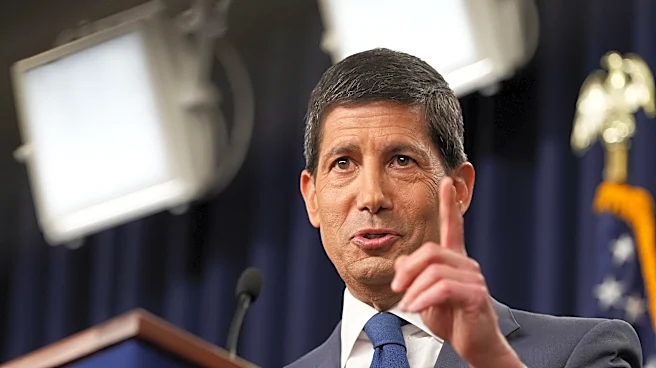
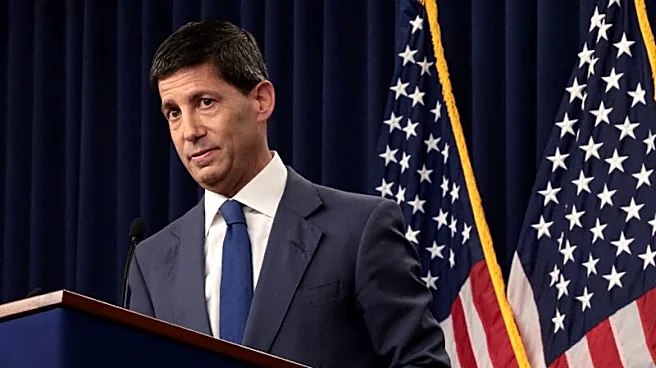
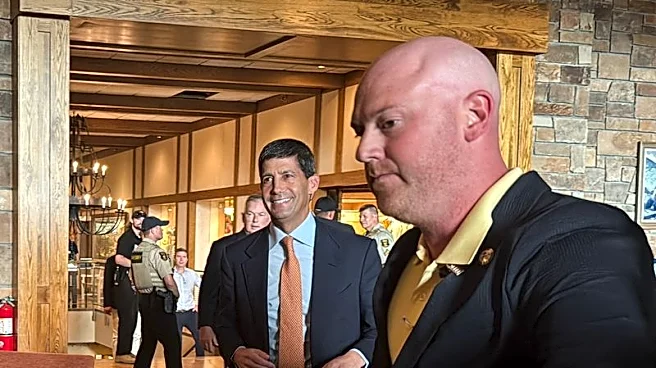
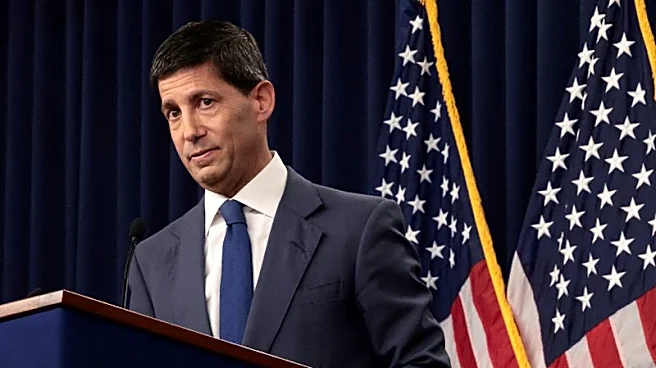
Federal Reserve Chair Kevin Warsh has indicated a potential interest rate hike, emphasizing the Fed's commitment to combating inflation, even as President Trump has criticized the current benchmark rate. During his keynote address at the Jackson Hole
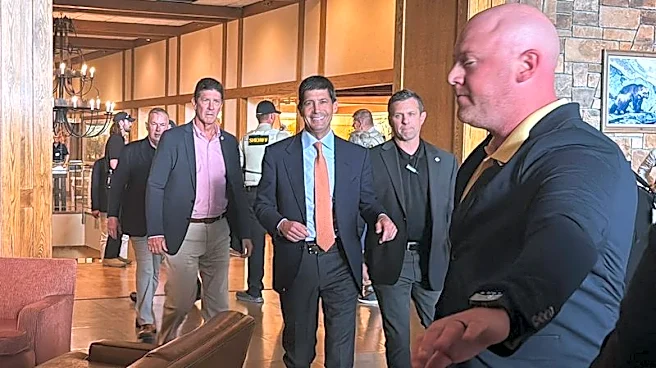
Economic Symposium, Warsh stated that the Fed requires clear and sufficient progress towards its inflation target, and if not met, 'we have work to do.' This stance suggests a departure from the tradition of signaling future rate movements, as Warsh has been intentionally less communicative about the Fed's plans. Despite a 'low hire, low-fire' U.S. jobs market, inflation remains a primary concern, driven by factors such as tariffs, ongoing conflicts, and significant corporate spending on AI infrastructure. Some Fed Commissioners have already voted for a rate increase, and market predictions, according to Polymarket, show a 51% chance of a hike rather than a cut in the near future. The August CPI data, crucial for the September FOMC meeting, is set to be released soon.
Why It's Important?
This development is significant for the U.S. economy as it signals a potential shift in monetary policy towards tightening, which could impact borrowing costs for consumers and businesses. A rate hike would aim to curb inflation, which Warsh views as the Fed's primary objective, but it also carries the risk of slowing economic growth and potentially affecting the job market. The divergence between the Fed's hawkish stance and President Trump's calls for rate cuts highlights a potential conflict between monetary policy independence and political pressure. This situation creates uncertainty for financial markets, as traders are left to interpret the Fed's intentions without explicit forward guidance, a change from previous Fed communication strategies. The outcome of the Fed's decisions will influence investment strategies, corporate spending, and consumer purchasing power, with implications for various sectors of the economy.
What's Next?
The immediate focus will be on the release of the August CPI data, which is expected to significantly influence the Federal Open Market Committee (FOMC) meeting in September. Market participants will closely watch for any further statements or actions from Fed Chair Warsh and other Fed officials for clearer indications of future monetary policy. The ongoing tension between the Fed's inflation-fighting mandate and presidential calls for rate cuts will likely continue to be a key narrative. Businesses and consumers should prepare for potentially higher borrowing costs if a rate hike materializes. The Fed's approach to communication, characterized by less explicit forward guidance, means that market participants will need to rely more on economic data and subtle cues to anticipate policy changes, potentially leading to increased market volatility.
Beyond the Headlines
The current situation underscores a deeper philosophical debate within monetary policy regarding the balance between controlling inflation and supporting economic growth, especially in the face of external pressures like global conflicts and technological advancements (AI spending). Fed Chair Warsh's decision to dial back on explicit forward guidance represents a significant shift in central bank communication, moving away from a strategy that aimed to provide market clarity. This change could lead to a more unpredictable financial environment, forcing market participants to become more adept at interpreting economic signals and less reliant on direct central bank pronouncements. The potential for political interference in monetary policy, as evidenced by President Trump's criticisms, also raises questions about the long-term independence of the Federal Reserve and its ability to make decisions solely based on economic indicators, free from political influence.