

What's Happening?
The collaboration between artist Andy Warhol and fashion designer Gianni Versace in the Spring/Summer 1991 collection significantly impacted the intersection of art and fashion. Versace, known for his fascination with celebrity, media, and glamour, integrated
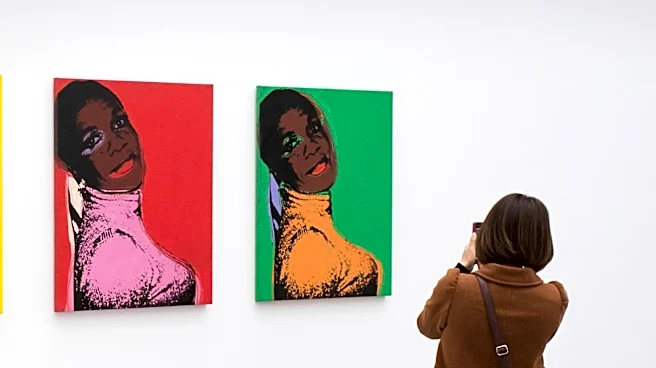
Warhol's iconic imagery, such as portraits of Marilyn Monroe and James Dean, onto his glamorous dresses. This collection featured Pop Art imagery combined with rhinestones and vibrant colors, embodying the sensual aesthetic synonymous with Versace. Models like Christy Turlington, Naomi Campbell, and Linda Evangelista showcased these designs on the runway. The partnership was seen as a natural fit, as both Warhol and Versace explored themes of celebrity and visual culture, with Warhol transforming celebrities into icons through repetition and Versace reintroducing these icons into the fashion realm.
Why It's Important?
This collaboration was pivotal in demonstrating how fashion could communicate as powerfully through images as art could. It blurred the lines between high art and popular culture, making art accessible and wearable. For the U.S. fashion industry, this event set a precedent for future art-fashion collaborations, influencing how luxury brands approached artistic partnerships. It showed that integrating well-known artistic motifs could create immediate cultural impact and commercial success. The collection's enduring influence was evident when Donatella Versace revisited Warhol-inspired images for the Spring/Summer 2018 collection, highlighting how deeply this visual language became embedded in the house's history. This fusion of art and fashion not only elevated the status of clothing as an artistic medium but also expanded the commercial potential of both art and fashion industries by creating highly desirable and culturally resonant products.
What's Next?
The legacy of the Warhol-Versace collaboration continues to influence contemporary fashion and art partnerships. Designers and brands frequently look to similar cross-disciplinary projects to generate buzz, artistic credibility, and commercial success. Future trends will likely see continued exploration of how art can be integrated into fashion, potentially with new technologies and digital art forms. The success of such collaborations encourages brands to seek out artists whose work aligns with their aesthetic and brand values, aiming to create collections that are both artistically significant and commercially viable. This ongoing dialogue between art and fashion will continue to shape consumer perceptions of luxury and creativity, pushing boundaries and redefining what constitutes a 'pop culture moment' in the industry.
Beyond the Headlines
The Warhol-Versace collaboration delves into deeper implications regarding the commodification of art and the artistic elevation of fashion. It showcased how Pop Art, by its very nature, takes familiar elements and presents them in a new light, making them part of everyday life through fashion. This partnership challenged traditional notions of where art belongs, moving it from the exclusive gallery space to the public runway and ultimately into consumer wardrobes. It also highlighted the power of celebrity and media in amplifying artistic and fashion statements. The ethical dimension involves the commercial use of artistic intellectual property and how such collaborations can either celebrate or dilute the original artistic intent. Culturally, it solidified the idea that fashion is not merely utilitarian but a powerful medium for artistic expression and cultural commentary, capable of reflecting and shaping societal values and aesthetics.