







What's Happening?
Real Madrid has announced a record revenue of €1.221 billion for the 2025-26 financial year, excluding player transfer income. This marks a 3.1% increase from the previous year, setting a new benchmark in the sports industry. The club attributes this
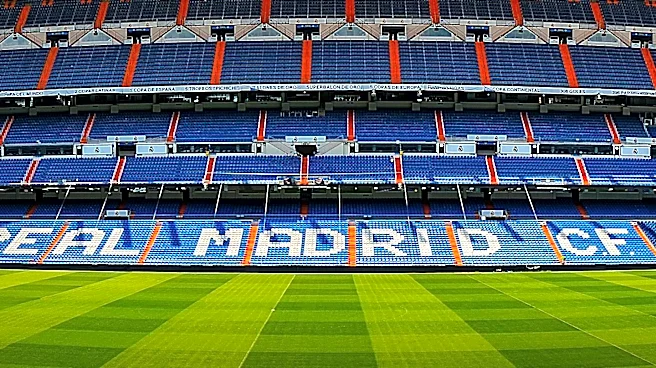
growth to increased stadium revenue, which rose by 11%, and a 6% rise in marketing income due to renewed sponsorship agreements and new commercial partnerships. Over the past seven years, Real Madrid's overall revenue has grown by 61%, with the Santiago Bernabeu's income doubling in the same period. The club's financial report also highlights a net profit after tax of €26.3 million, continuing a 26-year streak of profitability.
Why It's Important?
This financial milestone underscores Real Madrid's robust economic strategy and its position as a leader in sports finance. The club's ability to generate substantial revenue without relying on player transfers highlights its effective business operations and market appeal. The financial strength allows Real Madrid to invest heavily in infrastructure, such as the €1.407 billion redevelopment of the Santiago Bernabeu, and in its squad, with a 37% increase in spending over seven years. This financial health provides the club with the flexibility to pursue strategic player acquisitions, maintaining its competitive edge in international football.
What's Next?
Real Madrid's financial strategy is expected to continue supporting its ambitions both on and off the field. The club is in advanced talks to sign Yan Diomande from RB Leipzig for €135 million, reflecting its ongoing commitment to strengthening the squad. Additionally, with €475 million in unused credit facilities, Real Madrid is well-positioned to make further investments as opportunities arise. The club's financial policies will likely continue to focus on sustainable growth, balancing investment in talent with maintaining financial stability.