


What's Happening?
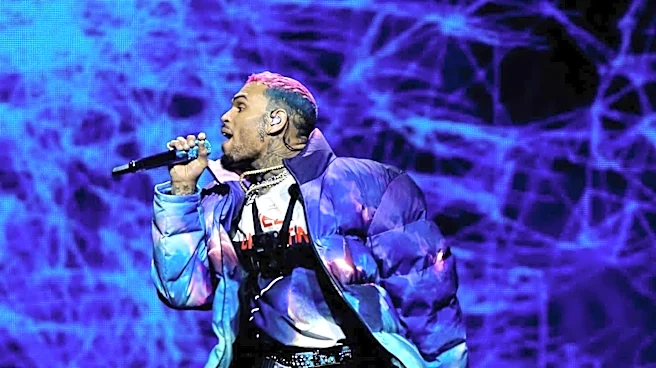
Chris Brown has publicly addressed recent criticism, asserting his disinterest in seeking approval from the music industry or other celebrities. His comments were made in an Instagram Stories post following renewed attention on honors presented to him
and Usher during an R&B Tour stop at AT&T Stadium. Texas state Representative Venton Jones later apologized for recognizing Brown, citing the singer's past domestic violence case. Brown responded by stating he had not requested the recognition and that his primary focus remains on his fans and their support for his music and live performances. He also defended his career, describing himself as one of the strongest artists currently working in the industry. Brown pleaded guilty in 2009 to assaulting Rihanna, yet has maintained a significant presence in R&B with numerous charting songs, albums, and sold-out performances.
Why It's Important?
This situation highlights the ongoing tension between an artist's past actions and their continued professional success and public reception. Chris Brown's sustained career, despite a widely publicized domestic violence conviction, raises questions about accountability, redemption, and the role of public opinion in the entertainment industry. The apology from a state representative for recognizing Brown underscores the societal discomfort and moral dilemmas associated with celebrating individuals with controversial pasts. For the music industry, it reflects the challenge of balancing artistic talent with ethical considerations. For fans, it presents a choice between separating the art from the artist or holding artists to a higher moral standard. This dynamic impacts how artists are perceived, honored, and supported, influencing broader discussions about celebrity culture and social responsibility.
What's Next?
Chris Brown's declaration of focusing on his fans and music suggests he will continue to produce and perform, likely maintaining his current trajectory of commercial success. The public and industry response to his statements will likely be divided, with some supporting his focus on music and others continuing to highlight his past actions. This event may reignite debates within the music industry and among the public regarding the criteria for honoring artists and the extent to which personal conduct should impact professional recognition. It is probable that any future awards or public acknowledgments involving Brown will be met with increased scrutiny and discussion, particularly from advocacy groups and public figures. His career will likely continue to be a case study in the complexities of celebrity and public forgiveness.
Beyond the Headlines
The ongoing narrative surrounding Chris Brown delves into deeper societal questions about forgiveness, rehabilitation, and the long-term consequences of past actions, especially for public figures. It also touches upon the power dynamics within the entertainment industry, where commercial success can sometimes overshadow ethical concerns. The incident with the Texas state representative illustrates the evolving landscape of public accountability, where past transgressions can resurface and impact current perceptions, even years later. This situation also highlights the role of social media in amplifying both support and criticism, allowing artists to directly address their audience while also facing immediate public backlash. It prompts a broader conversation about how society grapples with complex figures who possess undeniable talent but also carry a history of serious misconduct.