


What's Happening?
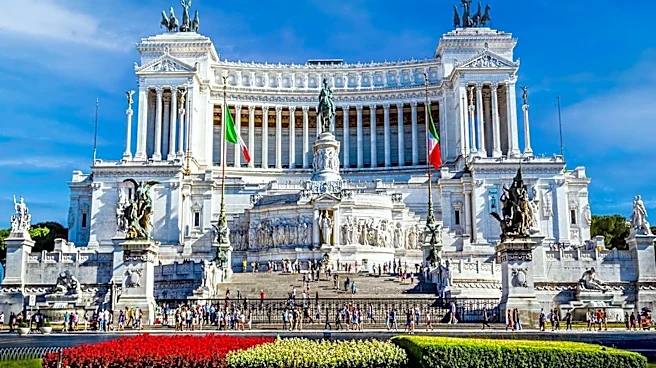
Rome is experiencing a significant surge in tourism, with 22.9 million visitors recorded last year, far exceeding its three million residents. This influx, partly driven by the upcoming 2025 Vatican Jubilee, has led to increased crowding and higher costs
within the city. Areas around major landmarks like the Colosseum and the Spanish Steps are now consistently packed, even during off-peak seasons. Local reports indicate that these visitor numbers are expected to continue rising. In response, the city has begun implementing measures to manage the pressure, such as timed €2 tickets for access to the Trevi Fountain, which recorded over a quarter of a million entries in its first month of operation. The increased tourism has also strained public transport and waste management systems, leading some residents to move to surrounding areas like Frascati.
Why It's Important?
The escalating overtourism in Rome highlights a growing challenge for major global tourist destinations, impacting both the quality of life for residents and the visitor experience. For residents, the surge in visitors contributes to rising rents, increased congestion, and strain on essential public services like transportation and waste disposal. This can lead to a diminished sense of community and a feeling that the city is 'performed' rather than 'lived in.' For tourists, the overcrowding detracts from the ability to enjoy historical sites peacefully, transforming what should be a cultural experience into a struggle through crowds. The implementation of timed entry and fees, while necessary for crowd control, also signals a shift in how access to public heritage sites is managed, potentially altering the spontaneous nature of tourism and raising questions about equitable access.
What's Next?
As visitor numbers are projected to continue their upward trend, Rome is likely to explore and implement further strategies to manage tourism flows. This could include expanding timed ticketing systems to other popular attractions, developing more sophisticated data-driven approaches to monitor and redirect crowds, or promoting lesser-known areas of the city to distribute visitors more evenly. There may also be increased focus on improving public infrastructure, such as transport and waste management, to cope with the higher demand. Local authorities might also consider policies aimed at balancing the economic benefits of tourism with the well-being of residents, potentially through regulations on short-term rentals or incentives for businesses that cater to local needs rather than solely to tourists. The success of these measures will be crucial in preserving Rome's authentic character while accommodating its role as a global tourist hub.
Beyond the Headlines
The situation in Rome reflects a broader global debate on sustainable tourism and the preservation of cultural heritage in the face of mass tourism. Beyond the immediate logistical challenges, overtourism raises ethical questions about the commodification of historical sites and the potential erosion of local culture. The shift towards managing access through timed tickets and fees could set precedents for how other historically significant cities handle similar pressures, potentially leading to a more controlled, curated tourist experience. This also highlights the tension between economic benefits derived from tourism and the social and environmental costs borne by local communities. The long-term implications could include a re-evaluation of tourism models, pushing for more responsible travel practices that prioritize local communities and environmental sustainability over sheer visitor volume, thereby fostering a more respectful interaction between tourists and their destinations.