







What's Happening?
Texas-based VoltaGrid, a company involved in powering a proposed AI data center in Lorneville, New Brunswick, Canada, pushed the New Brunswick government earlier this year to 'fix' the industrial carbon taxes it would face. VoltaGrid CEO Nathan Ough requested
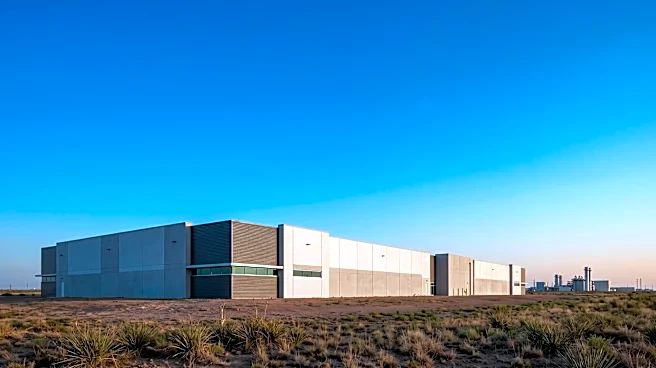
a predictable, set carbon tax rate for 15 years, stating 'No guessing.' This demand was made to officials at Opportunities New Brunswick, the provincial economic development agency considering taxpayer-funded support for the company. The proposed Spruce Lake AI data center, to be built by Alberta-based BeaconAI, plans to draw 200 megawatts from the N.B. Power grid and 190 megawatts from an onsite natural gas plant constructed by VoltaGrid. According to a joint environmental impact assessment filing, the gas plant is projected to emit over 750,000 tonnes of greenhouse gases annually, potentially making it the third-largest emitter in the province based on 2024 data. The province initially could not guarantee a 15-year fixed carbon tax rate due to potential changes in federal standards. However, VoltaGrid eventually agreed to comply with the system after the federal government allowed provinces, including New Brunswick, to adopt a weaker carbon pricing standard.
Why It's Important?
This situation highlights the complexities and challenges faced by U.S. companies operating internationally, particularly concerning environmental regulations and economic incentives. VoltaGrid's demand for a predictable carbon tax rate underscores the importance of regulatory stability for long-term business planning and investment decisions. The potential for the Spruce Lake data center's gas plant to become a significant greenhouse gas emitter raises questions about the environmental impact of large-scale data infrastructure and the balance between economic development and climate goals. The decision by the federal government to allow weaker carbon pricing standards for provinces could influence the competitiveness of U.S. companies in regions with varying environmental policies. This also demonstrates how U.S. businesses might seek to influence local regulatory frameworks to ensure financial viability, potentially impacting broader climate targets and policy consistency across different jurisdictions.
What's Next?
The environmental impact assessment review for the Spruce Lake AI data center is still underway. While VoltaGrid has agreed to comply with the weakened carbon pricing system, the long-term implications for New Brunswick's 2030 greenhouse gas emissions target remain a concern, as the additional emissions from the gas plant are projected to make achieving this goal unlikely. Opportunities New Brunswick's decision regarding potential funding for VoltaGrid is also pending. Future developments will likely involve continued monitoring of the project's environmental impact, potential adjustments to provincial or federal carbon pricing policies, and ongoing negotiations between the companies and government agencies. The outcome could set a precedent for how large industrial projects, particularly those involving U.S. companies, navigate environmental regulations and economic incentives in Canada.
Beyond the Headlines
The case of VoltaGrid and the Spruce Lake data center reveals a deeper tension between economic growth, technological advancement, and environmental sustainability. The push for a predictable carbon tax rate by a U.S. company operating abroad illustrates the global nature of corporate influence on environmental policy. The potential for a single project to significantly impact a region's climate goals underscores the need for comprehensive and integrated policy-making that considers both economic benefits and ecological costs. This scenario also touches upon the ethical considerations of carbon offsetting and the effectiveness of output-based pricing systems in genuinely reducing emissions. The broader implication is how governments balance attracting foreign investment and fostering technological innovation with their commitments to climate action, especially when those commitments are challenged by the very projects they seek to attract.