






What's Happening?
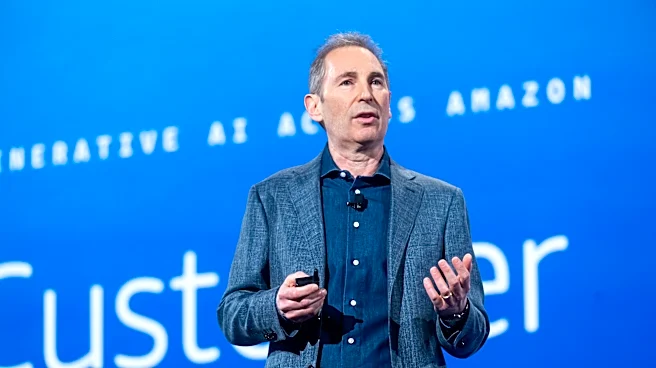
Matt Garman, a prominent figure at AWS, recently published an essay emphasizing that AI safety should be rooted in robust engineering rather than relying on an 'emergency brake' mechanism. His argument centers on building safety directly into the AI model's
architecture, including agent identity, containment, independent monitoring, and automated reasoning to prove boundaries. This approach suggests that AWS is integrating these safety principles into its silicon-level infrastructure. Garman is also scheduled to deliver a keynote address at the upcoming re:Invent conference on December 1st, where he is expected to discuss these advancements and other AWS initiatives. The company has been actively expanding its AI capabilities, including the launch of the European Sovereign Cloud and strategic partnerships, positioning itself competitively against other major tech firms in the AI landscape.
Why It's Important?
Garman's stance on AI safety is significant as it highlights a growing industry focus on foundational security and ethical considerations in artificial intelligence development. By advocating for engineering-driven safety, AWS is signaling a commitment to building more reliable and trustworthy AI systems, which could influence industry standards and best practices. This approach could particularly impact U.S. businesses and government entities that rely on cloud services for sensitive data and critical operations, as enhanced security measures at the infrastructure level can mitigate risks associated with AI deployment. Furthermore, AWS's aggressive expansion in AI, including its custom silicon initiatives and strategic partnerships, indicates a fierce competition in the cloud and AI markets. This competition can lead to rapid innovation, potentially offering U.S. enterprises more advanced and secure AI solutions, while also raising questions about vendor lock-in and data sovereignty.
What's Next?
Matt Garman's keynote at re:Invent on December 1st is anticipated to unveil further details regarding AWS's AI strategy and safety implementations. The event is expected to showcase new developments in agent trust architecture, sovereign cloud capabilities, and custom silicon, such as Trainium. These announcements could lead to new product offerings and services for AWS customers, particularly those in the U.S. seeking advanced AI solutions with strong security and compliance features. The ongoing competition with Microsoft and Google in the AI and cloud sectors suggests that AWS will continue to innovate rapidly, potentially driving down costs and increasing the sophistication of available AI tools. Stakeholders, including businesses and developers, will be closely watching for new tools and frameworks that could impact their AI development and deployment strategies.
Beyond the Headlines
The emphasis on engineering AI safety into the silicon and architecture, as advocated by Matt Garman, points to a deeper industry shift towards proactive security measures rather than reactive ones. This approach could have profound long-term implications for the ethical development and deployment of AI, particularly in sensitive sectors like finance, healthcare, and defense. The concept of 'agent trust architecture' and independent monitoring at the hardware level raises questions about transparency, auditability, and accountability in AI systems. As AI becomes more autonomous, ensuring that these systems operate within defined boundaries and can be independently verified will be crucial. This development also highlights the increasing importance of custom hardware in the AI race, as companies like AWS invest heavily in proprietary silicon to gain a competitive edge in performance and security, potentially reshaping the supply chain and market dynamics for AI infrastructure.