




What's Happening?
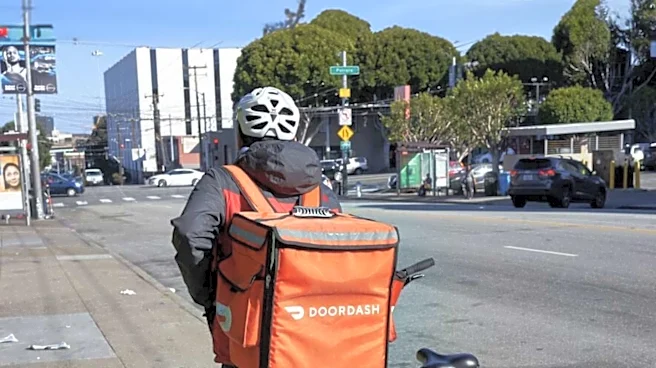
DoorDash's proposed acquisition of Instacart for approximately $17 billion is currently awaiting regulatory approval. This deal has drawn attention due to significant overlap in their workforce; data from analytics company Gridwise indicates that about
40% of Instacart's delivery workers also work for DoorDash. This overlap highlights a common practice among gig workers who utilize multiple apps to secure better-paying orders and minimize idle time between jobs. DoorDash has stated its intention to maintain both the Instacart app and brand, planning to list restaurants and stores on both platforms rather than merging them. The company asserts that this acquisition will enhance choices, opportunities, and leverage for workers. However, some analysts suggest a different outcome, raising concerns about potential impacts on worker bargaining power.
Why It's Important?
The proposed acquisition carries significant implications for the U.S. gig economy and its workforce. If approved, the consolidation of two major delivery platforms could reduce the number of independent options available to gig workers. Brandon Sellers, Gridwise’s vice president of marketing, suggests that fewer independent companies competing for workers' time could diminish their leverage and potentially affect their pay. This concern stems from the current practice where workers switch between apps to optimize earnings, a flexibility that might be curtailed with reduced competition. Conversely, DoorDash argues that the merger will create more opportunities and choices for workers by potentially streamlining access to both restaurant and grocery orders through a single network, similar to Uber's model with Uber Eats and its ride-hailing service. The outcome of this regulatory review will set a precedent for future consolidations in the gig economy, impacting labor dynamics and market competition.
What's Next?
The immediate next step for the DoorDash-Instacart acquisition is securing regulatory approval. The review process will likely scrutinize the potential impact on market competition and labor practices within the gig economy. Depending on the regulators' findings, the deal could be approved as is, approved with conditions, or blocked entirely. If approved, DoorDash plans to integrate Instacart's offerings while maintaining separate brand identities, aiming to provide a broader range of services to consumers and more work opportunities for couriers. However, the concerns raised by analysts regarding worker leverage will likely remain a point of discussion and potential advocacy from labor groups. The integration process, if the deal proceeds, will also reveal how DoorDash manages the combined workforce and whether its promises of increased worker choice and opportunities materialize.
Beyond the Headlines
Beyond the immediate business and regulatory aspects, this acquisition touches upon broader themes concerning the future of work in the U.S. gig economy. The high percentage of workers already operating across both platforms underscores the precarious nature of gig work, where individuals often juggle multiple engagements to achieve financial stability. The debate over whether consolidation empowers or disempowers these workers highlights fundamental questions about labor rights, market concentration, and the role of technology in shaping employment. The outcome could influence policy discussions around antitrust regulations in rapidly evolving digital markets and potentially lead to increased scrutiny of mergers involving companies that rely heavily on independent contractors. This situation also brings to light the ongoing tension between corporate efficiency and worker welfare in the platform economy.