





What's Happening?
John Cena, a prominent figure in WWE and now Hollywood, maintained his status as a top 'babyface' (heroic character) throughout his tenure under Vince McMahon, despite fan calls for a 'heel' (villainous character) turn. According to John 'Bradshaw' Layfield
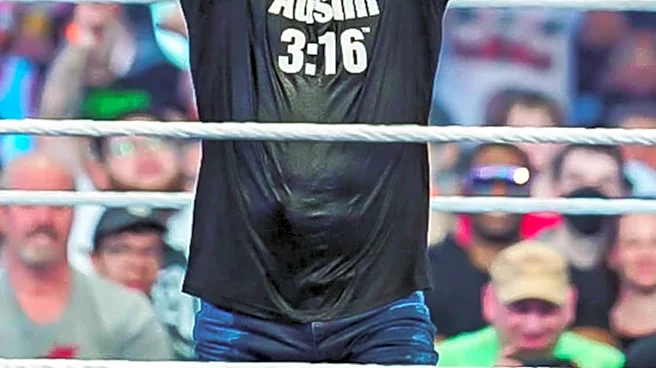
(JBL) on the podcast 'Something To Wrestle,' McMahon consistently dismissed suggestions for Cena to turn heel. This decision stemmed from a past experience with Stone Cold Steve Austin. Austin's heel turn at WrestleMania X-Seven, and particularly his WCW Invasion heel turn, proved controversial and led to a significant drop in merchandise sales. McMahon, having learned from this financial impact, was reportedly unwilling to repeat the situation with Cena, who was also a massive merchandise seller. Fans would only see a heel version of Cena under the TKO's WWE regime, not during McMahon's leadership.
Why It's Important?
This insight into Vince McMahon's decision-making process highlights the significant influence of past business outcomes on creative direction within WWE. The financial success tied to merchandise sales, particularly for top-tier talent like John Cena and Stone Cold Steve Austin, played a crucial role in shaping their on-screen personas. McMahon's reluctance to turn Cena heel, despite fan demand, underscores a business-first approach where the potential loss of merchandise revenue outweighed creative shifts. This strategy ensured the continued profitability of Cena's character as a fan favorite, impacting WWE's overall brand image and financial stability during his peak. It also demonstrates how a single, impactful event (Austin's heel turn) could set a precedent for future talent management and character development within the wrestling industry.
What's Next?
While John Cena's full-time wrestling career has largely transitioned to Hollywood, the implications of this historical decision continue to resonate within WWE's approach to its top stars. Future decisions regarding character turns for popular 'babyface' wrestlers will likely be weighed against the potential impact on merchandise sales and overall fan engagement, drawing lessons from both the Austin and Cena precedents. The TKO Group Holdings' ownership of WWE may introduce new creative philosophies, potentially allowing for more flexibility in character development, as evidenced by Cena's eventual heel portrayal under their regime. However, the core business principle of protecting profitable character archetypes, especially those with strong merchandise appeal, is expected to remain a significant factor in WWE's strategic planning.
Beyond the Headlines
The story of John Cena's unwavering 'babyface' persona under Vince McMahon delves into the complex interplay between creative storytelling, fan expectations, and commercial interests in professional wrestling. It reveals how a perceived 'failure' in one instance (Stone Cold Steve Austin's heel turn) can lead to a rigid adherence to a successful formula in another, even when it conflicts with evolving fan desires. This highlights a broader tension in entertainment industries: balancing artistic integrity and audience satisfaction with financial imperatives. The decision to keep Cena as a hero, despite calls for a change, reflects a calculated business move to maximize revenue from a highly marketable star, potentially at the cost of exploring more nuanced or challenging character arcs. This approach can shape the long-term perception of a performer and influence how future generations of talent are managed within the industry.