



What's Happening?
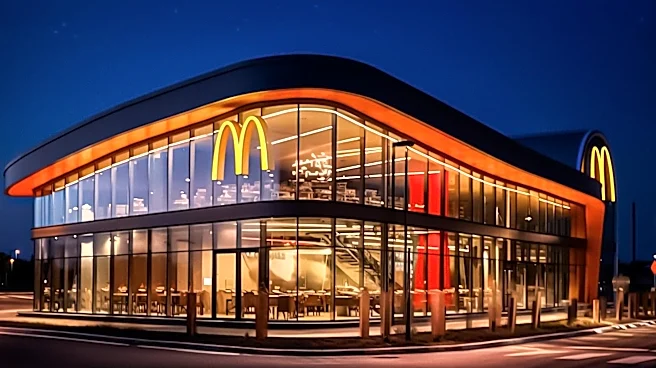
McDonald's CEO Chris Kempczinski is implementing new value-oriented meal bundles in response to a disappointing third quarter marked by lower customer traffic in U.S. restaurants. The company has initiated an eight-week test of mix-and-match and fixed-price
bundles across 1,900 U.S. locations. These bundles could include items like a McChicken sandwich and small fries for $3.50. Approximately 4,000 franchisees have already launched their own meal bundles without waiting for the official test results. Kempczinski acknowledged that previous efforts to attract customers with value deals were insufficient because they lacked compelling low-end options. This move comes as McDonald's faces a 'challenging' U.S. consumer environment, with comparable sales falling 0.2% in the three months leading up to September. The company aims to make its value proposition clearer and more compelling to customers, especially as lower-income Americans are reportedly skipping meals to save money.
Why It's Important?
This strategic shift by McDonald's is significant because it directly addresses changing consumer behavior and economic pressures in the U.S. The focus on value menus indicates a recognition that a segment of the American population is experiencing reduced disposable income, leading them to seek more affordable dining options. For McDonald's, a company that relies heavily on high customer traffic, re-engaging value-conscious consumers is crucial for reversing recent sales declines and maintaining market share. The success of these new bundles could influence pricing strategies across the fast-food industry, potentially leading competitors to introduce or enhance their own value offerings. Furthermore, the tension between corporate strategy and franchisee investment highlights the complexities of managing a large, franchised business model, where alignment is essential for effective execution of new initiatives. The outcome of these value menu tests will be closely watched as an indicator of consumer spending trends in the broader U.S. economy.
What's Next?
McDonald's will continue its eight-week test of new value meal bundles across 1,900 U.S. restaurants. Following this test period, the company will likely analyze the results to determine which bundles are most effective in attracting customers and improving sales. Based on these findings, McDonald's is expected to roll out a more standardized value menu across its U.S. locations early next year. The company will also need to manage its relationship with franchisees, some of whom have already implemented their own value deals and others who have expressed concerns about investment requirements for broader strategic overhauls. CEO Chris Kempczinski has indicated a willingness to adapt the strategy based on feedback, suggesting that the final implementation may be a collaborative effort. Competitors in the fast-food sector will likely monitor McDonald's performance closely, potentially adjusting their own pricing and promotional strategies in response to McDonald's moves and consumer reactions.
Beyond the Headlines
The shift towards more aggressive value offerings by McDonald's reflects a deeper economic reality in the U.S., characterized by a 'K-shaped' recovery where wealthier households continue to spend at higher-end establishments while lower-income consumers face significant financial strain. This trend suggests a growing bifurcation in consumer spending habits, which could have long-term implications for the restaurant industry and broader retail sectors. McDonald's strategy also highlights the ongoing challenge for established brands to balance affordability with perceived quality and experience. While value menus can drive traffic, they can also impact profit margins and potentially dilute brand perception if not managed carefully. The company's emphasis on 'getting smarter' and adapting its strategy based on market feedback underscores the dynamic nature of consumer preferences and the need for continuous innovation in a competitive landscape. This situation also brings to light the intricate power dynamics between a global corporation and its independent franchisees, where strategic alignment is critical for system-wide success.