






What's Happening?
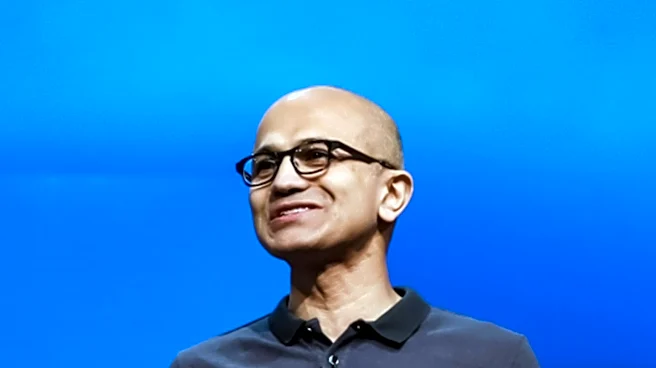
Satya Nadella, CEO of Microsoft, has expressed concerns about the potential economic impact of artificial intelligence (AI) if its benefits are not widely distributed across the economy. In a recent discussion, Nadella emphasized the need for AI to drive
productivity and economic growth, akin to the Industrial Revolution. He warned that companies overly reliant on a single AI provider might face challenges in the long term. Nadella's comments come amid debates about whether the AI industry is experiencing a bubble. He advocates for a balanced approach to AI integration, highlighting the importance of seeing tangible economic benefits beyond just the tech giants.
Why It's Important?
Nadella's insights are significant as they highlight the broader economic implications of AI beyond the tech sector. His warning about overreliance on a single AI provider underscores the need for diversification and resilience in AI strategies. The emphasis on economic growth reflects concerns that AI's potential is not yet fully realized in macroeconomic indicators, such as GDP. This perspective is crucial for policymakers and businesses as they navigate the integration of AI technologies. The call for widespread economic benefits suggests that AI's success should be measured by its impact on various sectors, not just tech companies.
What's Next?
Nadella's comments suggest a need for ongoing evaluation of AI's economic impact. Companies may need to reassess their AI strategies to ensure they are not overly dependent on a single provider. Policymakers might consider frameworks to encourage broader economic benefits from AI. The tech industry could see increased collaboration to address these challenges. As AI continues to evolve, stakeholders will likely focus on ensuring that its growth translates into tangible economic gains across different sectors.