








What's Happening?
A study led by the University of Göttingen has examined Globally Important Agricultural Heritage Systems (GIAHS) to understand how traditional farming practices can support sustainable land use while preserving cultural identity. The research highlights
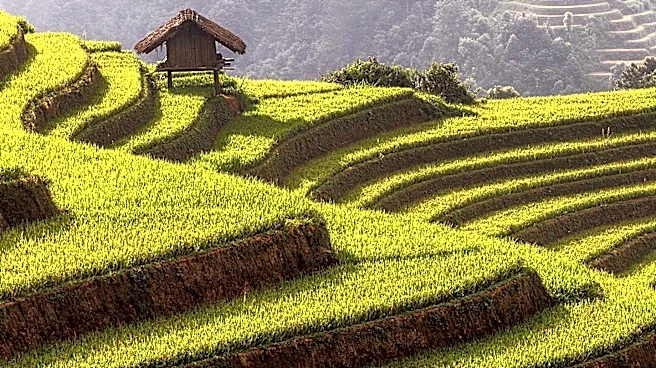
various agricultural systems worldwide, such as terraced rice fields in the Philippines and traditional hay-milk farming in the Austrian Alps. These systems demonstrate that food production and nature conservation can coexist, offering lessons for sustainable agriculture. The study identifies key factors for the viability of these systems, including local market integration, short supply chains, and adaptation to climate change.
Why It's Important?
The findings of this study are crucial for promoting sustainable agricultural practices that balance food production with environmental conservation. By showcasing successful traditional farming systems, the research provides a framework for integrating cultural values into modern agricultural policies. This approach can help address global challenges such as food security and biodiversity loss. The emphasis on local adaptation and market integration also highlights the potential for economic benefits, supporting rural communities and preserving cultural heritage.