








What's Happening?
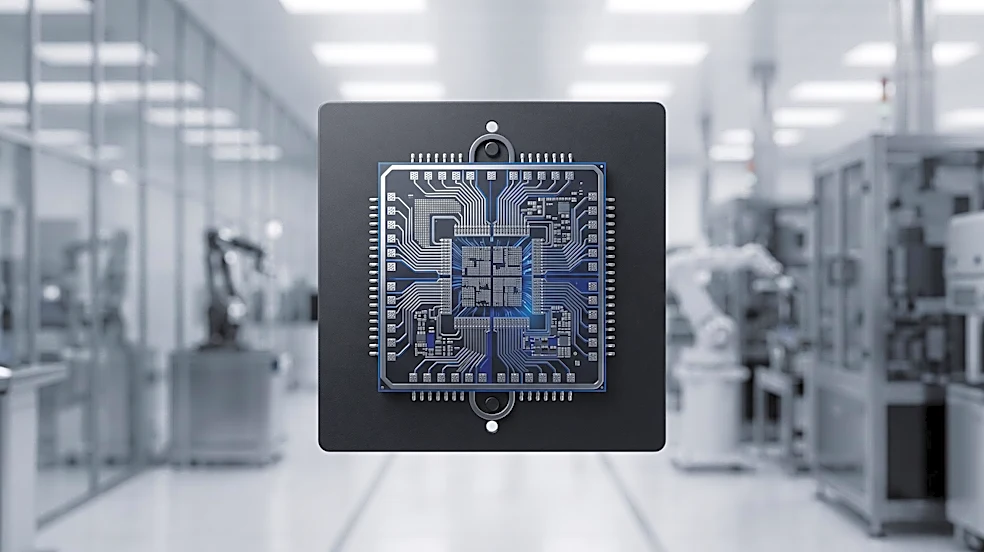
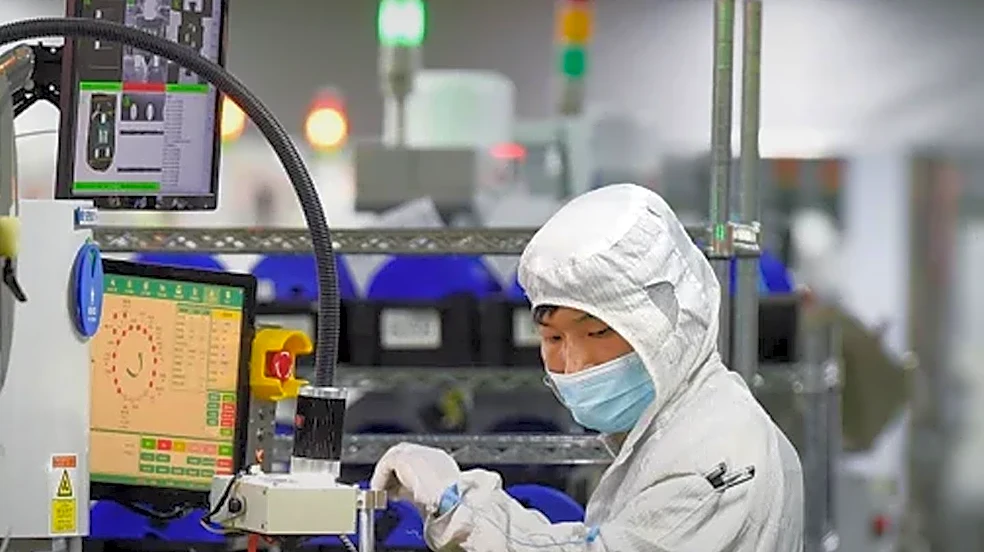
German science and technology company Merck has inaugurated a new semiconductor materials plant in Eumseong, North Chungcheong Province, South Korea. This facility will specialize in producing molybdenum dichloride dioxide, a chemical crucial for depositing
ultrathin metal films during the chip manufacturing process. The plant's output will primarily serve customers in South Korea and other Asian countries, with an initial focus on materials for advanced 3D NAND flash memory. This type of memory arranges cells in vertical layers to enhance storage capacity. The expansion is part of Merck's broader €600 million investment program, initiated in 2021, to meet anticipated growth in demand for semiconductor materials and advanced chip packaging, as reported by Korea Herald.
Why It's Important?
The opening of Merck's new plant is significant for the global semiconductor industry, particularly in addressing the increasing demand for advanced chip components. Molybdenum is emerging as a vital alternative to tungsten, whose electrical resistance becomes problematic as microchip components shrink and the number of layers increases. Companies like Samsung Electronics have already adopted molybdenum in their ninth-generation V-NAND, and SK hynix is preparing to use it in next-generation NAND memory. This shift could lead to more efficient and higher-capacity memory solutions, impacting various technology sectors that rely on advanced chips. The integrated production system at the Eumseong plant, combined with chemical delivery systems from Merck's Ansan facility, aims to maximize material utilization, potentially reducing waste and production costs across the supply chain.
What's Next?
Merck anticipates a potential doubling of demand for semiconductor materials and solutions over the next five years, positioning this new plant to capitalize on that growth. The company's strategic focus on South Korea, identified as one of the three key markets for semiconductor materials, suggests further investments and developments in the region. The adoption of molybdenum by major memory manufacturers like Samsung and SK hynix indicates a broader industry trend towards new materials to overcome current technological limitations. Future developments will likely include continued research into advanced materials for chip manufacturing and further integration of production processes to enhance efficiency and reduce environmental impact within the semiconductor supply chain.
Beyond the Headlines
The transition from tungsten to molybdenum in chip manufacturing highlights a deeper trend in the semiconductor industry: the continuous innovation required to sustain Moore's Law and meet the escalating demands for data storage and processing. This material science advancement is not merely a technical upgrade but reflects the intense global competition and strategic importance of semiconductor technology. The ethical implications include the responsible sourcing of these materials and the environmental impact of their extraction and processing. Furthermore, the concentration of advanced manufacturing capabilities in specific regions, such as South Korea, underscores geopolitical considerations and the importance of resilient supply chains in a highly interconnected global economy. This development also points to the long-term shift towards more complex and integrated microchip systems.