





What's Happening?
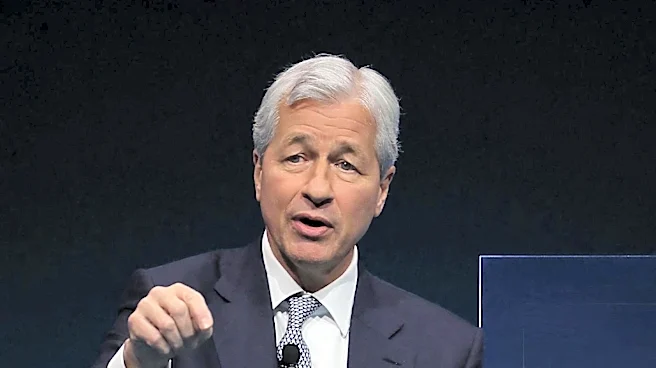
Jamie Dimon, CEO of JPMorgan Chase, the largest U.S. bank by market cap, has highlighted the critical importance of admitting insecurity and embracing truth-telling for effective leadership. Speaking on the Master Investor Podcast and at events at Columbia
Business School and the Economic Club of Chicago, Dimon, who has led JPMorgan Chase for over 20 years, asserted that as executives climb the corporate ladder, they transition from being experts in specific areas to generalists overseeing broader operations, often knowing less about each individual component. He argues that a CEO's inability to admit what they don't know, or their insecurity, poses a significant threat to their career and their company's success. Dimon also shared management principles, including the necessity of conveying bad news truthfully, acknowledging mistakes, and avoiding decisions made under pressure. He recounted an instance at Bank One where he transparently detailed financial losses to the board, building trust by presenting the unvarnished truth.
Why It's Important?
Dimon's insights are particularly relevant for the U.S. business landscape, where corporate leadership often emphasizes unwavering confidence and expertise. His perspective challenges this norm by suggesting that vulnerability and honesty are more valuable traits, especially in complex and rapidly evolving environments. For U.S. industries, this approach could foster more resilient leadership, encouraging open communication and a culture where problems are addressed proactively rather than concealed. Companies that adopt such principles might see improved decision-making, stronger internal trust, and better risk management. Conversely, leaders who fail to acknowledge their limitations or suppress negative information could lead their organizations into unforeseen difficulties, impacting financial stability and market confidence. This philosophy also has implications for talent development, suggesting that character and integrity are as crucial as technical competence for leadership roles.
What's Next?
The emphasis on transparency and admitting insecurity from a prominent figure like Jamie Dimon could influence leadership training and corporate governance practices across U.S. businesses. Companies might increasingly prioritize these 'soft skills' in their executive development programs and succession planning. There could be a shift towards fostering environments where constructive criticism is welcomed, and leaders are encouraged to delegate and trust their teams rather than attempting to be omniscient. This could lead to more collaborative leadership models and potentially more robust organizational structures capable of navigating complex challenges. Furthermore, Dimon's concerns about credit crises and borrowing, particularly in relation to the AI bubble, suggest that financial institutions and regulators may need to scrutinize lending practices more closely to prevent potential market instability.
Beyond the Headlines
Dimon's reflections extend beyond mere business strategy, touching upon the ethical and cultural dimensions of leadership. His personal experiences, including surviving cancer and emergency heart surgery, have seemingly reinforced his belief in the importance of authenticity and purpose. This suggests a deeper trend where corporate leaders are increasingly expected to demonstrate not just financial acumen but also strong ethical foundations and a commitment to their employees' well-being. His anecdote about reversing a cost-cutting measure that negatively impacted security and cleaning staff highlights a commitment to valuing all employees, regardless of their position. This approach could contribute to a more inclusive and equitable corporate culture, potentially influencing broader societal expectations for how businesses treat their workforce and manage their social responsibilities.