

What's Happening?
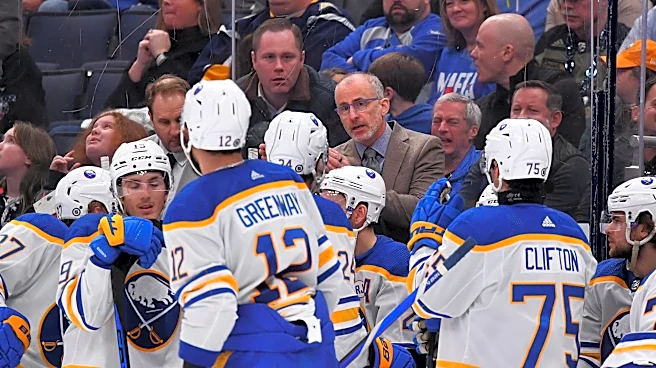
The Buffalo Sabres are experiencing significant offensive challenges this season, with their forwards failing to consistently produce as expected. General Manager Jarmo Kekäläinen opted not to sign a high-profile forward during the summer, instead betting
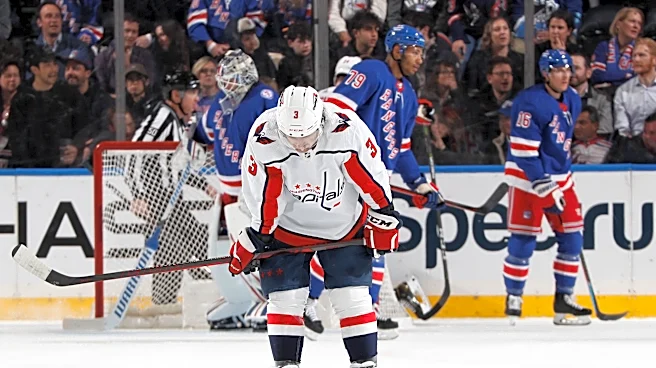
on existing players and homegrown talent to fill the void left by Alex Tuch's departure. This strategy has led to an inconsistent offensive output, despite a recent 6-3 victory over the Washington Capitals. Injuries to key wings like Konsta Helenius and Justin Danforth have exacerbated the problem, highlighting a lack of depth. While Jack Quinn has been a bright spot, Zach Benson is not considered a long-term offensive centerpiece. The team's reliance on Tage Thompson for scoring has allowed opposing teams to focus their defensive efforts, further stifling the Sabres' attack. The defensive unit has contributed points, but the overall forward group's struggles are a primary concern.
Why It's Important?
The Sabres' current offensive struggles and reliance on internal solutions carry significant implications for the team's performance and future trajectory in the NHL. By not acquiring a high-profile forward, the organization has placed a substantial gamble on its existing roster and developing prospects. If this strategy fails to yield consistent offensive production, the team risks falling further behind in the standings, potentially missing out on playoff contention. The lack of depth, particularly on the wings, means that injuries have a disproportionate impact, forcing less experienced players into larger roles. This situation could also affect player morale and fan engagement, as a struggling team often sees a decline in support. Furthermore, the performance of current players like Jack Quinn, who is due for a contract extension, becomes critical, as their individual success or failure will influence future roster decisions and financial commitments.
What's Next?
The Buffalo Sabres' front office is closely monitoring the performance of its current forwards, with potential call-ups from the Rochester Americans, such as Trevor Kuntar, being considered to address the offensive shortcomings. If the in-house talent and called-up players do not show significant progress, the team may be forced to explore trade options to acquire more productive forwards and salvage the season. The urgency for improvement is high, as the Sabres aim to avoid falling too far behind in the standings early in the season. The team's strategy of relying on homegrown talent will continue to be tested, and the coming weeks will likely dictate whether they stick with their current approach or make significant roster changes to boost their offensive firepower.