






What's Happening?
Somalia's fashion traditions are deeply rooted in its ancient and sophisticated cultural history, influenced by its strategic position along major Indian Ocean trade routes for thousands of years. This exposure connected Somalia to Arabia, Persia, East
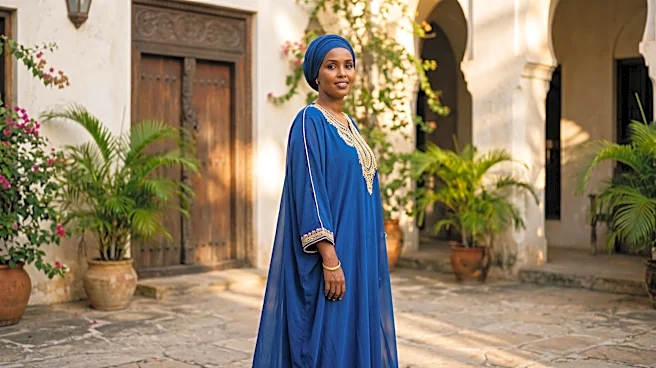
Africa, South Asia, and the wider Islamic world, yet Somali communities maintained a distinctive cultural identity expressed through clothing, poetry, beauty traditions, and social customs. Somali fashion historically balanced elegance, modesty, mobility, climate adaptation, spiritual values, nomadic practicality, and artistic refinement. Key garments include the dirac, a flowing lightweight dress for women, often layered and adorned with embroidery or sequins, and the guntiino, a wrapped cloth practical for nomadic life. Men traditionally wear the macawiis, a sarong-like garment, along with white robes, embroidered shawls, and kufi caps. Islam profoundly shaped these traditions, encouraging modest silhouettes and head coverings, while Somali communities developed unique local aesthetics through colorful fabrics and jewelry.
Why It's Important?
The rich fashion heritage of Somalia highlights the country's historical significance as a cultural and commercial crossroads in the Indian Ocean. This deep-seated cultural identity, expressed through clothing and beauty traditions, serves as a powerful symbol of resilience and continuity amidst periods of conflict and change. For the U.S. and international communities, understanding these traditions offers insights into the complex social fabric of the Horn of Africa, moving beyond often-simplified narratives of conflict to appreciate the region's rich cultural contributions. The adaptation of imported textiles into uniquely Somali designs also demonstrates a historical capacity for innovation and cultural synthesis. Furthermore, the modern visibility of Somali fashion in global modest fashion industries and natural hair movements showcases the ongoing influence of Somali diaspora communities and their role in shaping contemporary global trends, fostering cultural exchange and appreciation.
What's Next?
Modern Somali fashion continues to evolve, blending Gulf Arab modest fashion, East African aesthetics, contemporary Afro-fashion, luxury fabrics, diaspora influences, and global streetwear. The increasing visibility of Somali fashion in global markets, including modest fashion industries and natural hair movements, suggests a growing international appreciation for its unique aesthetics and cultural significance. Somali diaspora communities in regions like the United Kingdom, North America, and Scandinavia are playing a crucial role in popularizing these beauty aesthetics internationally. This trend is likely to continue, leading to more collaborations between Somali designers and international brands, further integrating Somali cultural elements into the global fashion landscape. Additionally, the celebration of traditional haircare practices and their poetic significance is expected to gain further recognition, contributing to broader discussions on cultural heritage and identity.
Beyond the Headlines
Beyond its aesthetic appeal, Somali fashion embodies a profound narrative of cultural preservation and adaptation. The historical emphasis on modesty, practicality, and spiritual values in clothing reflects a holistic approach to life that integrates faith, environment, and social norms. The detailed poetic descriptions of hairstyles, comparing them to natural elements, reveal a deep connection to nature and a rich oral tradition that values artistry and beauty. This cultural depth challenges simplistic views of the region, offering a nuanced perspective on identity and heritage. The ability of Somali women to adapt imported textiles into distinctively Somali designs speaks to a long history of creative agency and cultural resilience. In a globalized world, the continued evolution of Somali fashion, blending tradition with contemporary trends, underscores the dynamic nature of cultural identity and its capacity to thrive and influence on an international stage.