







What's Happening?
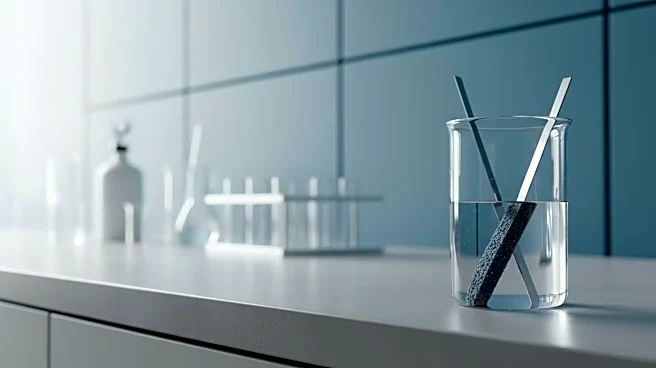
Researchers at the University of Chicago's Pritzker School of Molecular Engineering have developed a novel electrochemical technique for extracting lithium from aqueous solutions. Led by Associate Professor Chong Liu and former graduate student Grant
Hill, the team has adapted electrochemical intercalation, a principle used in battery technology, to selectively capture lithium ions even when they are heavily outnumbered by sodium ions. This method involves driving an electric current to insert lithium ions between the layers of a host material, effectively filtering lithium from saline water sources with high precision. The research, published in Nature Communications, addresses the challenge of distinguishing between lithium and sodium ions, which have similar charges and sizes, making separation difficult. The technique achieves 99% purity in lithium extraction, offering a cleaner and more adaptable alternative to traditional mining methods.
Why It's Important?
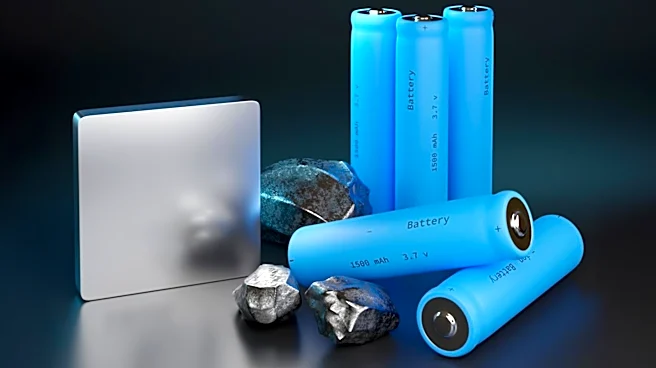
This breakthrough is significant as it addresses the growing demand for lithium, a critical component in batteries for smartphones, electric vehicles, and renewable energy storage. Current lithium extraction methods are environmentally taxing, involving hazardous chemicals and extensive water use. The new electrochemical technique offers a sustainable solution, potentially reducing reliance on environmentally sensitive mining regions and alleviating supply chain bottlenecks. By providing a cleaner and more efficient method of lithium extraction, this innovation could play a crucial role in supporting the global energy transition and reducing the environmental impact of lithium mining.
What's Next?
The next steps involve scaling the laboratory successes and developing manganese-based analogs to replace cobalt, which has limited availability and ethical concerns. Researchers aim to integrate these systems into decentralized extraction units that can be deployed near diverse lithium sources, creating a resilient and circular lithium economy. This advancement could lead to broader applications, including water purification and desalination, by designing membranes and electrodes capable of selectively sieving specific ions from multi-component electrolytes.
Beyond the Headlines
The research not only advances lithium extraction technology but also contributes to the broader scientific understanding of ion transport phenomena in layered oxides. By dissecting the dualistic reaction regimes of electrochemical intercalation and spontaneous ion exchange, the study opens avenues for designing advanced materials with tailored ion-selectivities. This interdisciplinary approach, merging electrochemistry, materials science, and chemical engineering, exemplifies how scientific innovation can address critical resource challenges and support sustainable development.