

What's Happening?
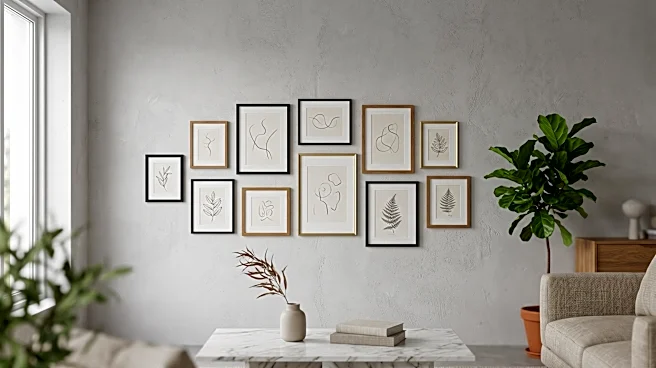
Effective arrangement of wall art is being highlighted as a critical component for enhancing home aesthetics and maximizing visual impact. Interior design guidance suggests that careful planning of art placement, rather than haphazard hanging, can significantly
contribute to a room's balance and warmth. Key recommendations include arranging pictures on the floor first to test layouts, considering symmetrical or asymmetrical placements based on art size, and measuring distances between pieces for consistent spacing. The advice also covers optimal hanging heights, typically at eye level, and how to arrange art over specific furniture like couches, beds, and fireplaces. The goal is to create focal points and visual continuity, whether through single large pieces, curated groupings, or gallery walls, while also allowing for flexibility in changing displays.
Why It's Important?
This emphasis on strategic wall art arrangement is important for the U.S. home decor and interior design industries. It underscores the value of professional design principles, encouraging consumers to view wall art not just as individual pieces but as integral parts of a cohesive room design. For retailers, this means an opportunity to offer more curated collections and provide guidance on arrangement, potentially increasing sales of multiple pieces. For interior designers, it reinforces their role in creating harmonious and visually appealing spaces, justifying their expertise in art selection and placement. This approach can also empower homeowners to make more informed decisions about their decor, leading to more satisfying and aesthetically pleasing living environments.
What's Next?
Expect to see more resources, tutorials, and design tools emerge that guide consumers and designers through the process of arranging wall art effectively. Home decor brands may start offering bundled art collections specifically designed for cohesive arrangements, complete with hanging templates or digital visualization tools. Interior design services might increasingly include detailed art placement plans as part of their standard offerings. There could also be a rise in modular or magnetic hanging systems that allow for easier rearrangement and experimentation, catering to the desire for flexible and evolving home aesthetics. Workshops and online courses on art arrangement could also gain popularity among DIY enthusiasts.
Beyond the Headlines
The meticulous arrangement of wall art goes beyond mere decoration; it taps into principles of visual psychology and human perception. A well-arranged display can influence mood, direct attention, and create a sense of order or dynamism within a space. This focus on intentional placement reflects a broader cultural appreciation for mindfulness and curated living, where every element in a home contributes to a desired atmosphere. It also highlights the interplay between art and architecture, where the physical structure of a room dictates and is enhanced by the artistic elements within it. Furthermore, the act of arranging art can be a form of personal expression and a creative outlet, allowing individuals to shape their environment in a way that reflects their personality and aesthetic sensibilities.