





What's Happening?
Micron Technology is a significant player in the AI hardware sector, providing DRAM and NAND memory solutions, including high bandwidth memory (HBM) for AI servers, GPUs, and data center accelerators. The company's revenue is primarily generated from
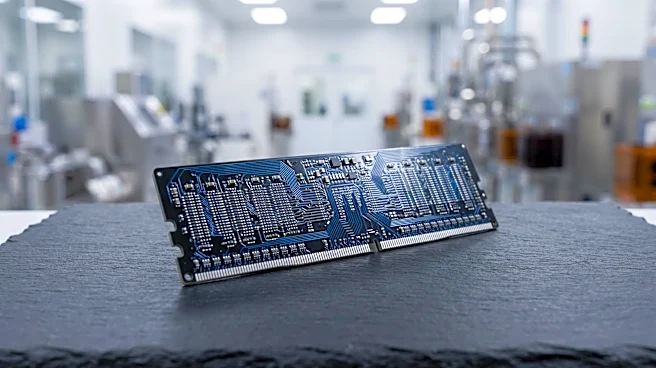
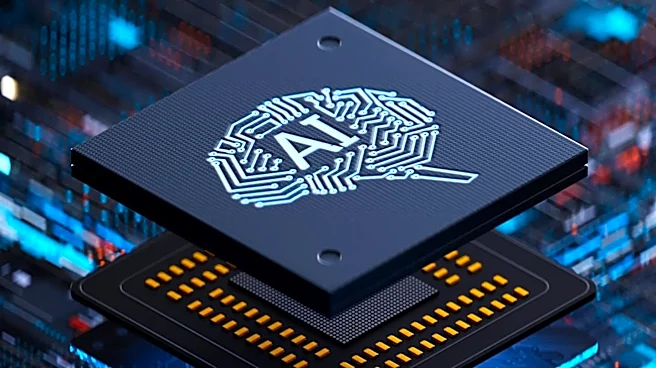
its cloud, data center, and mobile segments, and it holds a market valuation of approximately US$900.2 billion. Micron's role is crucial in supplying the memory chips that power AI accelerators, transforming what was once a secondary component into a vital element of AI server design. The increasing demand for AI hardware, driven by substantial investments from large technology groups, has placed companies like Micron Technology under a bright spotlight. The central innovation highlighted is HBM, which consists of stacked DRAM designed to provide AI accelerators with the necessary bandwidth to operate efficiently.
Why It's Important?
Micron Technology's contributions are critical to the advancement and scalability of artificial intelligence infrastructure in the U.S. and globally. As AI applications become more sophisticated and data-intensive, the demand for high-performance memory solutions like HBM is escalating. Micron's ability to supply these specialized memory chips directly impacts the efficiency and capability of AI servers and data centers, which are foundational to various industries, including cloud computing, autonomous vehicles, and advanced analytics. The company's position as a key supplier means that its performance and innovation directly influence the pace of AI development and deployment. Any shifts in Micron's memory cycle, capital expenditure trends, or AI demand could significantly affect the broader technology ecosystem and the competitive landscape of AI hardware.
What's Next?
The future trajectory for Micron Technology will largely depend on the evolving dynamics between memory supply and AI-driven demand. As corporate earnings continue to be heavily influenced by investments in AI hardware, Micron's ability to meet this demand will be crucial. The company will need to navigate potential shifts in the balance between tight supply and increasing AI-led demand for its products, particularly HBM. Monitoring Micron's memory cycle and capital expenditure trends will provide insights into its capacity to scale production and innovate further. The ongoing spending spree by large tech groups on AI hardware suggests a sustained demand for Micron's offerings, positioning the company at the forefront of the AI supply chain.
Beyond the Headlines
The increasing reliance on high bandwidth memory for AI accelerators underscores a broader trend in the technology industry: the growing importance of specialized hardware components in unlocking the full potential of artificial intelligence. This shift highlights how foundational elements, previously considered background components, are now critical differentiators in AI performance. The development and mass production of advanced memory technologies like HBM also raise questions about supply chain resilience and geopolitical considerations, as the U.S. seeks to maintain leadership in semiconductor manufacturing. Furthermore, the intense competition and rapid innovation in the AI hardware space could lead to accelerated technological advancements, but also potential market volatility for companies like Micron Technology.