






What's Happening?
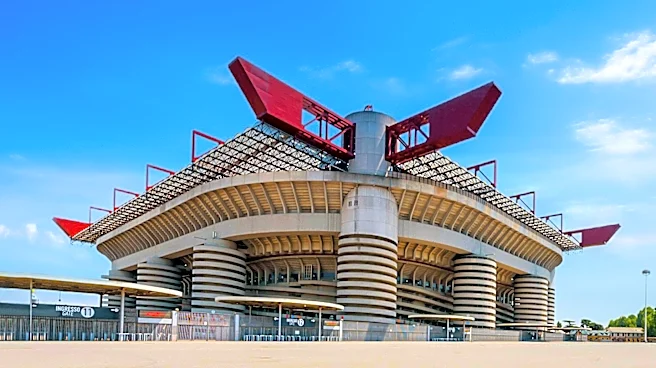
AC Milan and Inter Milan have jointly announced plans to build a new 71,500-seater arena, to be named the Generali Stadium, which they intend to share starting from 2031. This new stadium will replace the iconic San Siro, which has been AC Milan's home
for 100 years and Inter Milan's since 1947. Italian insurance company Generali has secured the naming rights for approximately 650 million euros (£542 million) through 2052, making it one of the most lucrative naming-rights deals in sports history. The clubs, both owned by US-based investment firms, view the new stadium as crucial for their economic transformation and ability to compete with top European clubs. The demolition of San Siro has been a long-standing discussion, with clubs citing its deterioration and lack of modern features as reasons for their declining competitiveness in European football.
Why It's Important?
The construction of the Generali Stadium signifies a major shift in the financial and operational strategies of two of Italy's most historic football clubs. This move is expected to significantly boost matchday revenues, hospitality, premium experiences, entertainment, and commercial opportunities, which are vital for competing with Europe's elite clubs. The substantial naming-rights deal with Generali highlights a growing trend in sports finance, where external corporate partnerships play a crucial role in funding large-scale infrastructure projects. For the US-based investment firms owning the clubs, this project represents a strategic investment aimed at modernizing assets and increasing profitability, aligning with broader trends of American investment in European sports. The success of this venture could influence future investment decisions in other European football clubs.
What's Next?
The clubs aim to begin sharing the Generali Stadium by 2031. The project, estimated to cost around 1.2 billion euros (£1 billion) for construction, will focus on generating income by selling nearly 12,000 premium or hospitality seats and hosting a diverse range of events, including concerts and other sports fixtures. While the financial benefits are clear, the plan has faced opposition from some Inter fans who have protested the demolition of the San Siro, a venue deeply embedded in the clubs' history and local culture. The clubs will need to navigate these cultural sensitivities while pushing forward with the construction and commercialization of the new stadium. The success of this model could set a precedent for other European clubs considering similar stadium developments.
Beyond the Headlines
The decision to replace the San Siro with the Generali Stadium touches upon deeper themes of tradition versus modernization in sports. The San Siro is not just a stadium; it's a cultural landmark with a century of history for AC Milan and decades for Inter. Its demolition represents a symbolic break from the past, prioritizing economic viability and global competitiveness over historical sentiment. This move reflects a broader trend in European football where clubs, increasingly owned by international investment firms, are adopting business models akin to American sports franchises, emphasizing revenue generation through modern facilities and diverse event programming. The controversy surrounding the demolition underscores the tension between the commercial imperatives of modern football and the emotional attachment of fans to their club's heritage and traditional grounds.