






What's Happening?
Stanley Druckenmiller's Duquesne Family Office divested all 28,090 shares of Arm Holdings during the last quarter, as detailed in its 13F filing on November 16. This sale, valued at approximately $10 million at quarter-end prices, represented a minor
portion—just 0.2%—of Duquesne's $4.15 billion in U.S. stock holdings as of September 30. The move by Duquesne was part of a broader trend among major funds, with ten large funds selling Arm shares and eight acquiring them during the same period. Despite Arm's stock experiencing a 47% decline since September 30, analysts' earnings estimates for the company have remained stable. The decision to sell by Druckenmiller, a prominent investor, highlights differing views among institutional investors regarding Arm's future performance and valuation.
Why It's Important?
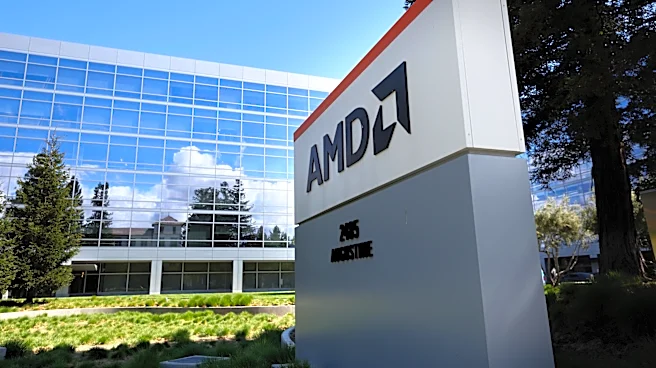
The divestment by a high-profile investor like Stanley Druckenmiller, even if a small percentage of his overall portfolio, can signal caution to other market participants regarding Arm Holdings. While the sale itself was relatively small for Duquesne, it contributes to a narrative of mixed institutional sentiment towards Arm. The fact that ten major funds sold Arm while eight bought it indicates a divergence in investment strategies and outlooks for the semiconductor design company. This split suggests that some investors may be concerned about Arm's valuation, especially given its 47% stock price drop since September 30, while others may see the decline as a buying opportunity, supported by stable analyst earnings estimates. The competition Arm faces, particularly from companies like AMD in the data center market, also plays a role in these investment decisions, as the future success of Arm depends on its ability to secure a significant share of data center spending.
What's Next?
The differing investment stances among major funds regarding Arm Holdings suggest continued volatility and debate around the stock's future. Investors will likely monitor Arm's performance in the coming quarters, particularly its ability to capture market share in the competitive data center segment. Future 13F filings from institutional investors will provide further insights into whether the trend of selling or buying Arm shares continues. The stability of analysts' earnings estimates, despite the stock's recent decline, indicates that some believe Arm's underlying business fundamentals remain strong. However, the significant drop in stock price since September 30 will put pressure on Arm to demonstrate growth and profitability to justify its valuation and regain investor confidence. The ongoing competition with other chip designers will also be a critical factor to watch.
Beyond the Headlines
The mixed institutional sentiment surrounding Arm Holdings reflects a broader challenge in valuing technology companies with significant growth potential but also intense competition. The divergence between a stock's market performance and analyst earnings estimates often highlights underlying debates about future market penetration, competitive advantages, and overall industry trends. For Arm, its position as a foundational technology in various computing segments, from mobile to data centers, makes it a bellwether for the broader semiconductor industry. The decisions by influential investors like Druckenmiller, even when small in scale, can influence market psychology and prompt deeper scrutiny of a company's long-term prospects. This situation underscores the complexity of investment decisions in a rapidly evolving technological landscape, where different investors weigh risk and reward based on varied interpretations of market signals and future growth drivers.