






What's Happening?
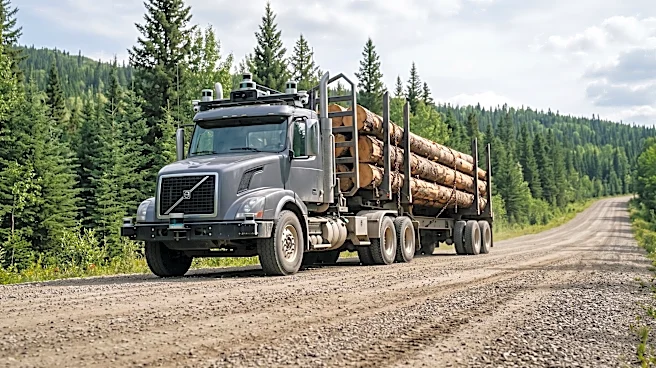
FPInnovations, in collaboration with forestry company West Fraser and autonomous vehicle technology provider Kodiak AI, has successfully completed a pilot project in Hinton, Alberta. The initiative aimed to test the integration of autonomous trucks into forest operations.
Over a two-week period, the project involved training crews, validating safety procedures, collecting baseline data, and mapping road sections to identify operational constraints. Both manual and autonomous runs were conducted to assess real-world conditions, including dust, road grades, surface quality, and mixed traffic. Feedback was gathered from logging truck drivers and site personnel to inform the evaluation. Supported by Natural Resources Canada, the project specifically evaluated the performance of Kodiak's autonomous-capable truck and identified areas requiring further development. The involved parties are now planning the next steps, which include engaging with local stakeholders and Alberta regulators.
Why It's Important?
This pilot project represents a significant step towards the adoption of autonomous vehicle technology in the North American forestry sector. The successful completion of the trial in Alberta, involving a major player like West Fraser, indicates a serious commitment to exploring innovative solutions for log hauling. Autonomous trucks have the potential to address critical challenges facing the U.S. and Canadian forestry industries, such as labor shortages, safety concerns in hazardous environments, and the need for increased operational efficiency. By automating log transport, companies could reduce operating costs, improve delivery times, and enhance worker safety by removing drivers from potentially dangerous routes. The involvement of Natural Resources Canada highlights governmental interest in fostering technological advancements that can bolster the competitiveness and sustainability of the natural resource sector. The findings from this pilot could influence future investment and regulatory frameworks for autonomous vehicles in industrial applications across the continent.
What's Next?
Following the completion of the pilot project, FPInnovations, West Fraser, and Kodiak AI are moving forward with the next phase, which includes engaging with local stakeholders and Alberta regulators. This engagement is crucial for addressing any concerns, gathering further input, and navigating the regulatory landscape for autonomous vehicle deployment in forestry. The identified gaps in development will likely be prioritized for further research and refinement of Kodiak's autonomous technology. Future steps could involve expanded trials, the development of specific operational guidelines, and potentially the phased implementation of autonomous log hauling in commercial operations. The success of this pilot could also encourage other forestry companies in the U.S. and Canada to explore similar technologies, potentially accelerating the adoption of autonomous solutions across the industry.
Beyond the Headlines
The integration of autonomous log hauling technology, as piloted by FPInnovations, West Fraser, and Kodiak AI, carries profound implications beyond immediate operational efficiencies. This development could fundamentally reshape the labor market within the forestry sector, potentially leading to a shift in required skill sets from truck drivers to technicians and remote operators. Ethical considerations surrounding job displacement and the need for workforce retraining will become increasingly pertinent. Furthermore, the deployment of autonomous vehicles in remote and challenging forest environments raises complex legal questions regarding liability in the event of accidents and the establishment of clear regulatory frameworks for their operation. The data collected on real-world conditions like dust and road grades will be invaluable for developing robust AI systems capable of navigating unpredictable natural terrains, pushing the boundaries of autonomous technology in non-urban settings. This pilot serves as a precursor to a broader industrial automation trend that could impact various heavy-duty sectors.