


What's Happening?
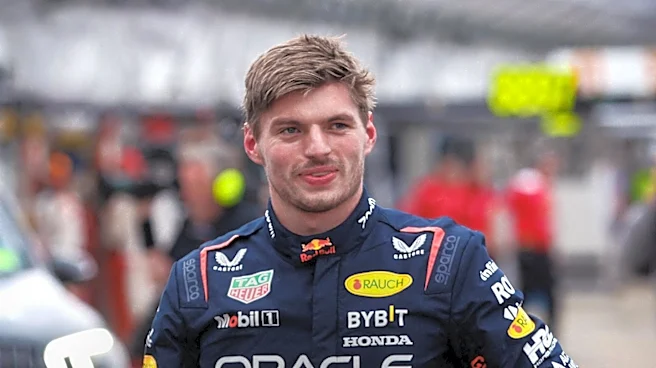
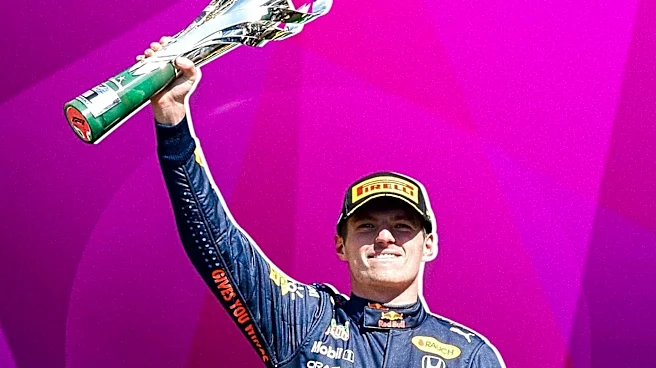
Max Verstappen has made a striking prediction regarding Kimi Antonelli's future performance in Formula 1, stating that Antonelli will 'get even better' as a driver once he secures his maiden world championship. Antonelli, at 20 years old, is on the cusp
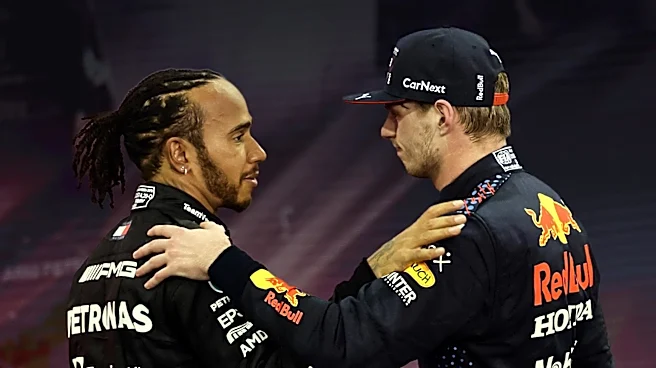
of clinching the title at the Mexico City Grand Prix, needing only a ninth-place finish. His rapid ascent to F1 success has occurred in just his second season, marked by significant improvement after a challenging rookie year and nine wins this season. Verstappen believes that achieving the world title will allow Antonelli to approach race weekends with a more relaxed attitude, unlocking further potential. In contrast, Verstappen noted that seven-time champion Lewis Hamilton, while not getting slower, is unlikely to get faster due to his extensive experience, unlike Antonelli who still has considerable room for growth.
Why It's Important?
Verstappen's prediction highlights the psychological impact of achieving a major career milestone like a world championship in a high-pressure sport like Formula 1. For a young driver like Antonelli, securing the title early in his career could remove immense pressure, allowing him to drive with greater freedom and confidence, potentially leading to even higher levels of performance. This perspective offers insight into the mental game within F1, where psychological factors can be as crucial as raw talent and technical skill. The comparison with Lewis Hamilton also underscores the different developmental stages of drivers; while seasoned champions maintain peak performance, younger talents often have untapped potential that can be unlocked through experience and success. This dynamic influences team strategies, driver development programs, and the overall competitive landscape of the sport, as teams constantly seek drivers who can evolve and improve.
What's Next?
If Kimi Antonelli secures the F1 world championship at the Mexico City Grand Prix, the immediate 'next' will be the celebration and recognition of his achievement. Following this, the focus will shift to how Antonelli's performance evolves in subsequent races and seasons, as Verstappen predicted. His newfound 'relaxed attitude' could translate into more consistent results, bolder maneuvers, and a deeper understanding of race strategy. This could also intensify the competition at the top of F1, potentially setting up new rivalries and challenging established drivers. For his team, a championship win would validate their investment and development strategy, potentially attracting more talent and resources. The comparison with Hamilton might also fuel discussions about the career trajectories of F1 drivers and the optimal age for peak performance.
Beyond the Headlines
Verstappen's comments delve into the deeper psychological aspects of elite sports performance, suggesting that success can be a catalyst for further growth rather than a plateau. This concept extends beyond Formula 1, resonating in various fields where individuals strive for peak performance. The idea that achieving a 'life's goal' can lead to a more relaxed and, paradoxically, more effective approach, speaks to the human element of ambition and pressure. It also raises questions about how different individuals respond to success and whether early achievement fosters complacency or fuels further excellence. The contrast between Antonelli's potential for growth and Hamilton's sustained but perhaps not accelerating performance offers a nuanced view of athletic development, highlighting that while experience brings mastery, youth often holds the promise of unforeseen leaps in capability. This perspective could influence how sports organizations nurture talent and manage expectations for their rising stars.