







What's Happening?
Artificial intelligence is significantly reshaping the U.S. employment landscape, leading to a transformation of job roles rather than widespread job displacement. Recent analysis by Stanford's Digital Economy Lab, using administrative payroll data from
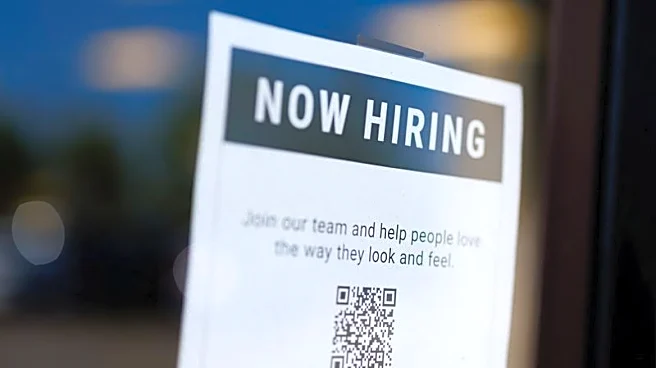
ADP, indicates that while there hasn't been a broad AI-driven employment collapse, there is a notable impact on young workers. Employment for individuals aged 22 to 25 in highly AI-exposed occupations is approximately 19 percent lower than it would be if it had kept pace with similarly aged workers in less-exposed fields. This gap has widened from 15 percent a year prior. The adjustment is primarily occurring through reduced hiring of young workers, rather than increased firings. Experienced workers in these same occupations have not experienced a comparable decline. The International Labour Organization (ILO) also supports this view, finding that most jobs exposed to generative AI are more likely to be transformed than made entirely redundant, affecting job quality, autonomy, coordination, and work organization. This shift suggests that the initial impact of AI is more subtle, affecting hiring pipelines and the architecture of jobs, particularly for entry-level positions.
Why It's Important?
This shift in employment patterns has profound implications for the U.S. labor market and future workforce development. The reduced hiring of young workers in AI-exposed fields could dismantle the traditional apprenticeship system within the knowledge economy. Entry-level positions, which historically provided foundational learning and experience, are being impacted as AI automates tasks typically assigned to beginners, such as summarization, basic research, and data cleanup. While economically rational for individual companies to leverage AI for efficiency, this trend could lead to a future shortage of experienced senior talent if entry points into careers diminish. Furthermore, AI is not only changing who companies hire but also the mechanisms used for hiring. The increasing automation in recruitment, from resume optimization by candidates to AI-driven screening by employers, creates an 'escalation loop' that can lead to biased rejection patterns if not properly governed. This highlights the critical need for organizations to rethink workforce planning, moving beyond simple headcount to a more nuanced understanding of work architecture and the capabilities developed through various tasks.
What's Next?
Policymakers and workforce leaders face the immediate challenge of addressing the evolving impact of AI on employment, particularly concerning young workers. Organizations must move beyond simply adopting AI tools and instead focus on redesigning work processes and hiring systems to align with the new AI-driven environment. This includes re-evaluating job descriptions, interview processes, and assessment methods to reflect the skills truly required in an AI-augmented workplace. There is a growing need to define what an 'AI-era apprenticeship' looks like, potentially involving junior employees performing more complex work sooner or focusing on judgment, problem framing, and responsible AI use. Regulatory frameworks, such as the EU AI Act, are beginning to impose transparency requirements on AI systems used in employment decisions, indicating a future where organizations will need to explicitly identify and govern AI's influence on hiring. Companies must also consider the long-term implications of reduced entry-level hiring on their future talent pipelines and invest in reskilling and upskilling existing workers to meet the demands of an AI-integrated economy.
Beyond the Headlines
The subtle yet significant impact of AI on entry-level hiring raises ethical and societal questions about equitable access to career opportunities and the future of social mobility. If the initial rungs of the career ladder disappear, it could exacerbate existing inequalities and create a generation of workers struggling to gain the necessary experience for advancement. The 'no hire, no fire' environment, where layoffs are low but hiring has dramatically slowed, suggests a deeper structural change in the labor market that AI is accelerating. This shift necessitates a re-evaluation of traditional metrics for assessing AI's impact, moving beyond unemployment rates to consider changes in job quality, career pathways, and the development of human capital. The increasing reliance on AI in hiring also brings to the forefront concerns about algorithmic bias and the need for robust human oversight to prevent discriminatory outcomes. Ultimately, the challenge is not just about adapting to AI, but about proactively shaping a future workforce that is both productive and inclusive, ensuring that technological progress benefits all segments of society.