






What's Happening?
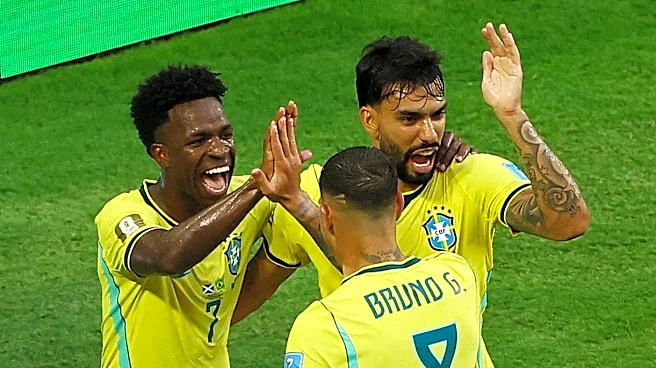
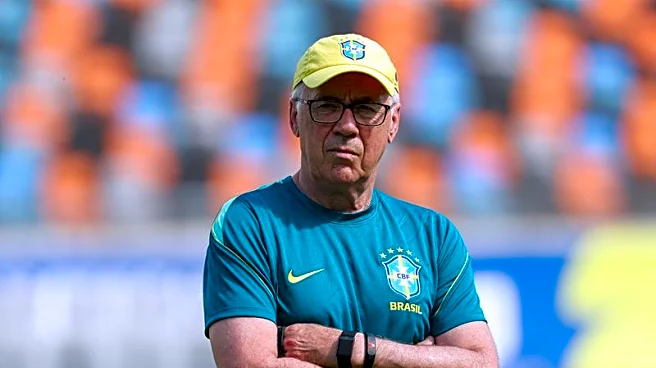
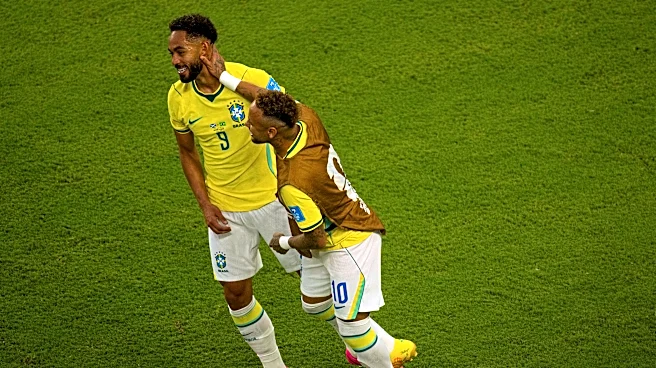
Brazil's national soccer team is gaining momentum in the World Cup under the guidance of coach Carlo Ancelotti. A significant factor in their success is the performance of Matheus Cunha, who has emerged as a pivotal player. Unlike traditional Brazilian
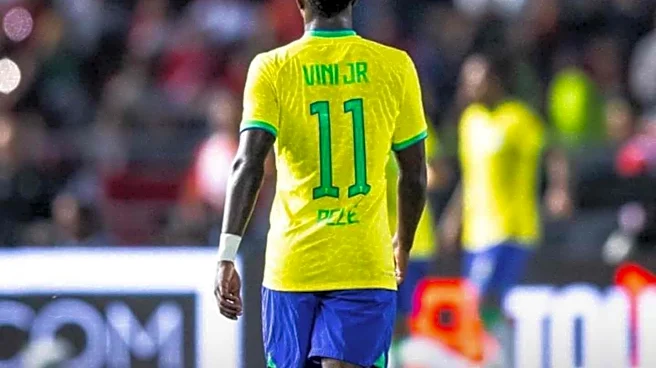
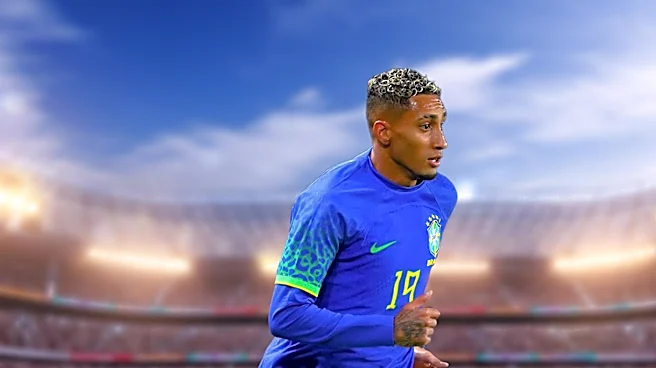
strikers, Cunha operates as a 'nine-and-a-half,' blending the roles of a forward and a playmaker. His ability to drop deep and create space for teammates like Vinicius Jr. and Rayan has been instrumental in Brazil's tactical approach. This strategy was evident in their match against Scotland, where Brazil controlled the game by allowing the opposition possession and then pressing effectively. Cunha's versatility and tactical awareness have provided Brazil with a new dimension in their attack, contributing to their strong performance in the tournament.
Why It's Important?
The evolution of Brazil's playing style, with Cunha at the forefront, signifies a shift from traditional Brazilian football tactics. This change could influence how other teams approach their strategies against Brazil, as they now have to contend with a more adaptable and unpredictable opponent. For Brazil, this adaptability under Ancelotti's management could enhance their chances of progressing further in the World Cup. The team's ability to balance defensive solidity with attacking prowess, while maintaining flexibility in their approach, positions them as a formidable contender. This development also highlights the importance of tactical innovation in modern football, where traditional roles are being redefined to gain competitive advantages.
What's Next?
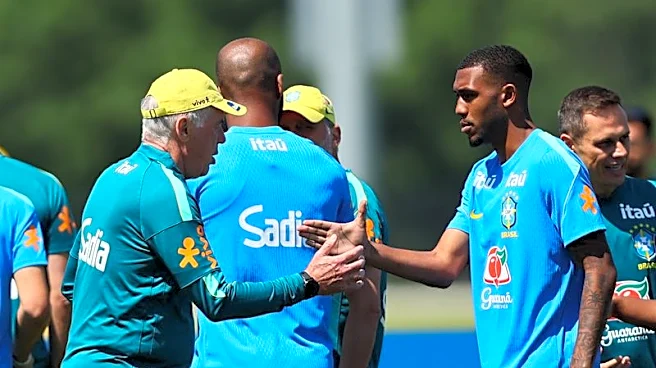
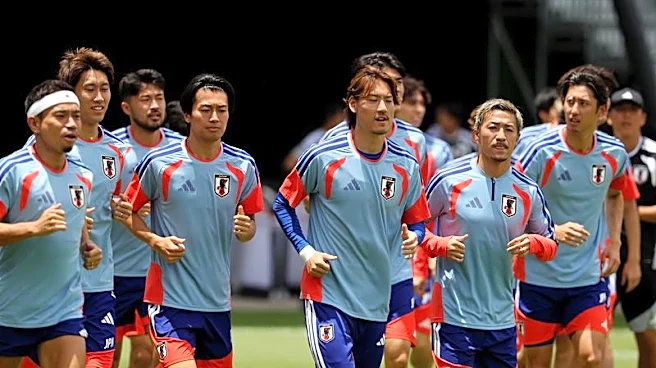
As Brazil advances in the World Cup, they face the challenge of maintaining their momentum against increasingly competitive teams. Their next match against Japan will test their tactical adaptability and the effectiveness of Cunha's role. Ancelotti's ability to adjust strategies based on the opposition will be crucial. The team's performance in upcoming matches will determine whether this new approach can lead them to World Cup success. Additionally, the continued development of players like Cunha could influence future selections and formations, potentially setting a new standard for Brazilian football.
Beyond the Headlines
Brazil's evolving strategy under Ancelotti reflects broader trends in international football, where adaptability and tactical flexibility are becoming essential. This shift challenges traditional notions of player roles and team identity, emphasizing the need for innovation. The success of this approach could inspire other national teams to reconsider their strategies, potentially leading to a more dynamic and unpredictable style of play in international tournaments. Furthermore, the focus on players like Cunha, who defy conventional roles, highlights the growing importance of versatility in player development.