





What's Happening?
Dell Technologies reported a significant increase in its customer base for the Dell AI Factory with NVIDIA, reaching over 6,500 customers in October 2026, up from 5,000 in the previous quarter. This growth occurs as enterprises increasingly adopt private
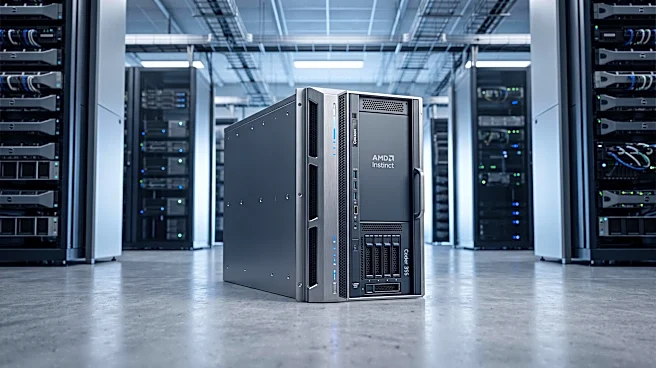
artificial intelligence solutions to gain greater control over sensitive business data, GPU infrastructure, AI inference costs, and regulatory compliance. The Dell AI Factory with NVIDIA integrates PowerEdge servers, GPUs, storage, networking, software, and professional services to address these needs. Despite the growing adoption, enterprises face challenges in deploying private AI, including high infrastructure costs, data privacy and compliance concerns, unpredictable inference expenses, integration complexity, and uncertain return on investment (ROI). Dell cited an analysis suggesting its AI Factory could be up to 90 percent more cost-effective than public cloud solutions over two years for specific workloads.
Why It's Important?
The expansion of Dell's AI Factory customer base signifies a growing demand for integrated, on-premises AI solutions within the enterprise sector. This trend is crucial for U.S. businesses, particularly those in regulated industries like banking and healthcare, as it allows them to maintain data sovereignty and comply with stringent privacy regulations while leveraging advanced AI capabilities. The challenges highlighted, such as high infrastructure costs and uncertain ROI, underscore the significant investment and expertise required for successful AI deployment. Dell's offering aims to mitigate these issues by providing a comprehensive, integrated platform, potentially making AI more accessible and cost-effective for a broader range of enterprises. This shift towards private AI infrastructure could also reduce reliance on public cloud providers for sensitive workloads, impacting the competitive landscape of AI service delivery.
What's Next?
As enterprises continue to navigate the complexities of AI deployment, Dell and other providers like NVIDIA, HPE, and IBM will likely focus on refining their integrated solutions to address persistent challenges such as cost-effectiveness, ease of integration, and demonstrable ROI. The competition among these technology giants to offer comprehensive private AI platforms will intensify, leading to further innovation in hardware, software, and professional services. Future developments may include more advanced AI management software, enhanced security features, and flexible deployment models to cater to diverse enterprise needs. CIOs will continue to evaluate solutions based on total cost of ownership, inference cost per million tokens, GPU utilization, data sovereignty, security controls, and deployment flexibility, driving providers to offer more tailored and efficient AI infrastructure solutions.
Beyond the Headlines
The increasing adoption of private AI infrastructure reflects a broader strategic shift in how enterprises view and manage their data and computational resources. Beyond immediate cost and compliance benefits, this trend has deeper implications for national digital sovereignty and the control of critical technological assets. By bringing AI processing in-house, companies can reduce their exposure to geopolitical risks associated with cross-border data flows and foreign cloud providers. This could foster a more resilient and secure digital economy within the U.S., enabling domestic innovation and protecting sensitive intellectual property. Furthermore, the emphasis on integrated solutions like Dell's AI Factory suggests a move towards more holistic vendor partnerships, where companies seek end-to-end support for their complex AI initiatives rather than piecemeal solutions, potentially reshaping the technology vendor ecosystem.