






What's Happening?
Joe Tsai, co-owner of the Brooklyn Nets, and his long-time investment partner Ollie Weisberg, view sports franchises as a highly valuable asset class due to their limited supply and the growing market for live sports. Weisberg, who joined Tsai as a minority
owner and vice chair of Brooklyn Sports & Entertainment, emphasized this perspective in a recent interview. Their investment strategy, initiated with a 49% stake in the Nets in 2017, is rooted in the belief that live sports uniquely bring people together and that media rights will continue to grow, shifting from cable to streaming platforms. The partners also recognized Brooklyn as a rapidly expanding part of New York City. Their approach extends beyond the Nets, with Blue Pool Capital's portfolio including a stake in the NFL's Miami Dolphins and SailGP, an international sailing league. The organization is also investing over $150 million in renovations for the Barclays Center and has partnered with Alibaba as the Nets' official technology and cloud partner.
Why It's Important?
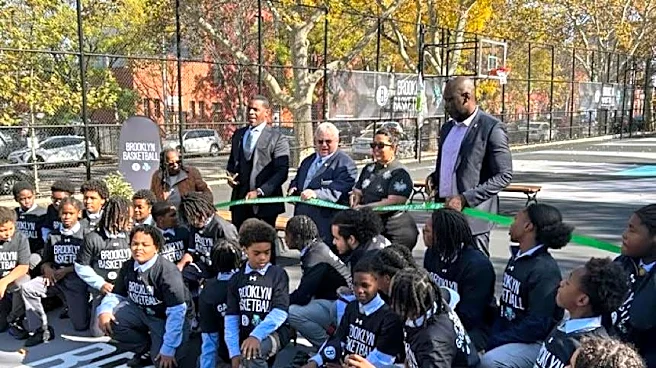
The investment philosophy of Joe Tsai and Ollie Weisberg highlights a significant trend in the sports industry: the increasing recognition of professional sports teams as robust financial assets. This perspective drives substantial capital into the sector, leading to enhanced fan experiences, technological advancements in venues, and broader community engagement. For U.S. sports, this means continued growth in franchise valuations and a focus on long-term sustainability rather than short-term gains. The strategy of improving the 'product' around the game—including food, wine, and club spaces—directly impacts consumer spending and loyalty, benefiting local economies and related businesses. Furthermore, the emphasis on community assets, such as the Brooklyn Basketball programming reaching over 50,000 young people annually, underscores a growing trend of sports organizations integrating social responsibility into their business models, fostering deeper connections with their fan bases and local communities.
What's Next?
Joe Tsai and Ollie Weisberg's long-term investment strategy for the Brooklyn Nets and their broader sports portfolio suggests continued significant investments in infrastructure, technology, and community programs. The ongoing $150 million renovation of the Barclays Center, partly financed by a minority stake sale to Julia Koch and her family, indicates a commitment to enhancing the fan experience. Future endeavors may include further expansion into other sports leagues, with Weisberg mentioning interest in Formula One, lacrosse, and soccer. The partnership with Alibaba for technology and cloud services suggests a continued push for innovation in fan engagement, such as 360-degree replay technology. The organization's community outreach, like the expansion of Brooklyn Basketball programming into new neighborhoods by 2027, will likely continue to grow, aiming to build a multi-generational fan base and solidify the team's role as a community asset.
Beyond the Headlines
The approach taken by Joe Tsai and Ollie Weisberg in viewing sports franchises as a sophisticated asset class reflects a broader financialization of sports. This trend moves beyond traditional sports ownership, often driven by passion, to a more analytical, business-centric model focused on long-term value creation and diversified portfolios. This shift can lead to increased professionalism in team management and operations, but it also raises questions about the balance between profit motives and the intrinsic cultural and community value of sports. As sports become more integrated into global investment portfolios, the influence of financial markets on team decisions, player acquisitions, and league structures could grow. This could potentially lead to a more homogenized global sports landscape, driven by economic efficiencies, while also offering unprecedented resources for growth and innovation within the industry.