








What's Happening?
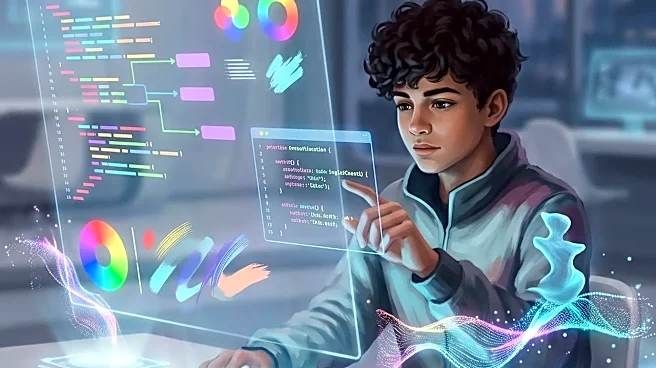
Epic Games, the company behind Fortnite and Unreal Engine, has released a new version of its Epic Games Launcher, which it claims was developed using generative AI, a process referred to as 'vibe coding.' The company stated that the new launcher is designed
to be significantly faster than Valve's Steam platform, boasting a five-second boot time. While Epic acknowledges that the AI-coded launcher may have some bugs, it encourages users to report any issues through the 'Send Feedback' button. This move comes amidst a broader shift within Epic Games towards an 'AI first' development pipeline, as indicated by a recent Bloomberg report. The company's CEO, Tim Sweeney, has also suggested that this AI pivot could extend to Unreal Engine, aiming to enhance efficiency and enable teams to build more and better content.
Why It's Important?
This development signifies a growing trend in the technology and gaming industries towards integrating artificial intelligence into core development processes. Epic Games' decision to use AI for its launcher, and potentially for game development and its Unreal Engine, could set a precedent for other companies. If successful, this approach could lead to faster development cycles and more efficient software, potentially disrupting traditional coding methods. However, the acknowledgment of potential bugs and the reliance on user feedback highlight the experimental nature of this integration. The competitive landscape between Epic Games and Steam, the dominant PC digital games marketplace, is also a key factor. Epic's attempt to gain an edge through AI-driven speed could influence market share and consumer preferences, particularly if the performance benefits outweigh any initial technical glitches.
What's Next?
Epic Games will be closely monitoring user feedback on the new AI-coded launcher to address any bugs and refine its performance. The company's broader 'AI first' development strategy, including its potential application to Unreal Engine and upcoming game titles like a Marvel and Star Wars shooter, will likely continue to unfold. The success or challenges encountered with this AI integration could influence the adoption of similar methodologies across the gaming industry. Competitors like Valve may also respond to Epic's AI-driven initiatives, potentially leading to an acceleration of AI research and development in the gaming sector. The long-term impact on game development workflows, software efficiency, and the competitive balance between major gaming platforms remains to be seen.
Beyond the Headlines
The 'vibe coding' approach raises deeper questions about the future of software development and the role of human programmers. While Epic Games frames AI as a tool for efficiency and enabling creators, the concept of 'no more hand-written code' could spark debates about job displacement, the nature of creativity in a highly automated environment, and the potential for AI-generated code to introduce unforeseen complexities or biases. The ethical implications of relying heavily on AI for software that impacts millions of users, especially concerning data privacy and algorithmic transparency, could also become more prominent. Furthermore, the shift towards AI-driven development could lead to a redefinition of intellectual property rights in the context of AI-generated content, posing new legal and cultural challenges for the industry.