



What's Happening?
In Mali, cultural festivals such as Fesmamas and Ségou'Art are actively working to perpetuate the nation's rich artistic traditions. These festivals aim to integrate new forms of expression, including electronic music, into established cultural practices.
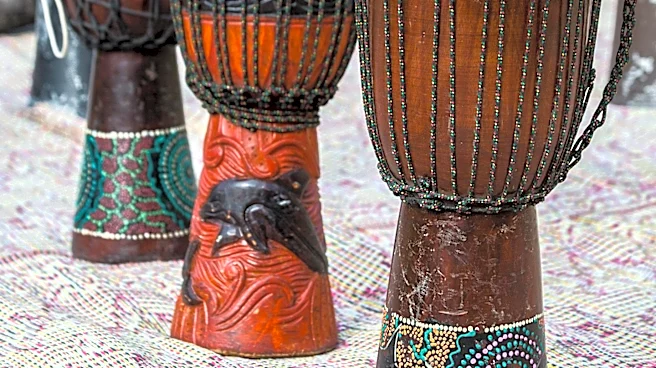
The broader context involves the sogo bò tradition, an art form recognized by UNESCO as intangible cultural heritage. This tradition, which combines masks, puppets, and music, is deeply rooted in the communities along the Niger River, including the Bozo, Somono, Marka, and Bamanan people. The sogo bò involves youth associations (tôwnw) that organize and prepare performances, with boys focusing on costumes and percussion, and girls composing melodies. These performances feature various masks representing real or mythical animals and daily life scenes, evolving from daytime displays to more mystical nocturnal presentations. The festivals serve as a vital platform for the continuation and adaptation of these ancestral arts.
Why It's Important?
The preservation of cultural traditions like sogo bò through festivals such as Ségou'Art is crucial for maintaining Mali's unique cultural identity. In an era of increasing globalization and modernization, these events act as bulwarks against the erosion of indigenous art forms. By incorporating contemporary elements like electronic music, the festivals ensure that these traditions remain relevant and appealing to younger generations, fostering intergenerational cultural transmission. This effort also highlights the economic and social importance of cultural heritage, potentially boosting local tourism and providing livelihoods for artists and artisans. The recognition of sogo bò by UNESCO underscores its global significance, making its preservation a matter of international cultural importance. The challenges faced by these traditions, including climate change, economic shifts, and political instability, make the role of these festivals even more critical as symbols of cultural resilience.
What's Next?
The future of Malian cultural traditions, particularly those showcased at festivals like Ségou'Art, will likely involve continued efforts to balance preservation with innovation. Organizers may explore further integration of modern artistic expressions and technologies to attract wider audiences and ensure the traditions' longevity. There could be increased collaboration with international cultural organizations and institutions to secure funding and expertise for preservation initiatives. Additionally, educational programs aimed at younger Malians will be essential to instill an appreciation for their cultural heritage and encourage participation in these art forms. The ongoing political and environmental challenges in Mali will necessitate adaptive strategies to ensure the sustainability of these cultural events and the traditions they uphold.
Beyond the Headlines
Beyond the immediate cultural impact, the efforts to preserve Malian traditions through festivals like Ségou'Art touch upon deeper themes of cultural sovereignty and identity in a post-colonial world. These festivals are not merely entertainment; they are acts of self-determination, asserting the value and resilience of Malian culture against external pressures and internal challenges. The integration of modern music forms also raises interesting questions about cultural evolution and authenticity—how much can a tradition adapt before it loses its essence? This dynamic interplay between tradition and modernity reflects a broader global dialogue on how societies can honor their past while embracing the future. The success of these festivals could serve as a model for other nations grappling with similar cultural preservation dilemmas.