



What's Happening?
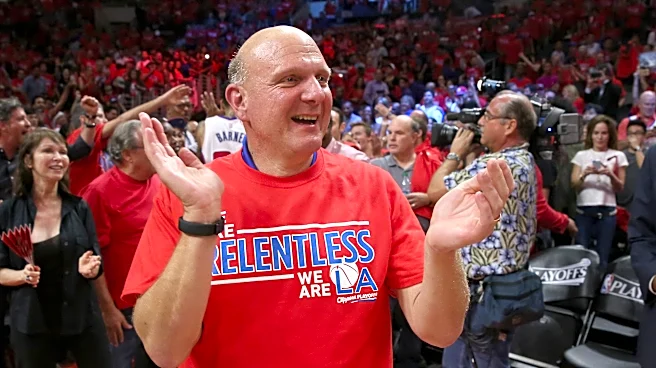
The NBA has issued significant penalties against Los Angeles Clippers owner Steve Ballmer for circumventing the league's salary cap. Ballmer received a one-year suspension, and the team was fined $30 million and stripped of its first-round draft picks
from 2029-33. This ruling, described by Pablo Torre as one of the most substantial in NBA history, has severely impacted the Clippers' immediate and future prospects. Torre, an investigative podcaster, highlighted that his reporting focused on Ballmer's impropriety rather than player involvement, emphasizing that owners granting cap-circumventing requests are the core issue. The penalties stem from an exposé that centered on a 'no-show endorsement contract' with Aspiration, among other undisclosed business deals. In addition to the NBA's action, the U.S. Justice Department initiated its own investigation into Ballmer in September, with Torre suggesting it could involve securities fraud.
Why It's Important?
This case underscores the NBA's commitment to upholding its financial regulations and maintaining competitive balance within the league. The severe penalties imposed on a high-profile owner like Steve Ballmer, one of the wealthiest in American sports, send a clear message that such violations will not be tolerated. The loss of draft picks and a substantial fine will significantly hinder the Clippers' ability to build their roster and compete in the coming years, potentially altering the competitive landscape of the NBA. Furthermore, the involvement of the U.S. Justice Department in a separate investigation into potential securities fraud elevates the seriousness of the situation beyond sports governance, indicating broader legal and ethical implications for corporate conduct. This could set a precedent for how similar financial improprieties are handled across professional sports and business sectors, impacting owner accountability and league integrity.
What's Next?
The Los Angeles Clippers will operate without their owner, Steve Ballmer, for a year due to his suspension, which could impact team morale and strategic decisions. The financial penalty and loss of future draft picks will necessitate a re-evaluation of the team's long-term player acquisition and development strategies. The ongoing U.S. Justice Department investigation into Ballmer for potential securities fraud represents a significant legal challenge. The outcome of this investigation could lead to further legal repercussions for Ballmer, potentially impacting his ownership status or other business ventures. Pablo Torre, who spearheaded the investigative reporting, believes there was sufficient evidence to compel Ballmer to sell the team, suggesting that the NBA's current penalties might not be the final chapter in this saga. Future developments will likely focus on the progress of the federal investigation and any subsequent actions taken by legal authorities or the NBA.
Beyond the Headlines
The scandal surrounding Steve Ballmer and the Clippers highlights a deeper tension between the immense wealth of sports team owners and the regulatory frameworks designed to ensure fair play. The distinction drawn by Pablo Torre between player requests and owner grants of cap-circumventing deals points to a systemic vulnerability where owners' financial power can be leveraged to bypass league rules. The involvement of the U.S. Justice Department in investigating potential securities fraud suggests that actions within professional sports can have far-reaching legal consequences, extending beyond internal league disciplinary measures. This case could prompt other sports leagues to review and strengthen their own financial oversight mechanisms and owner accountability protocols. It also raises questions about the ethical responsibilities of team ownership and the potential for financial misconduct to undermine the integrity of professional sports.