








What's Happening?
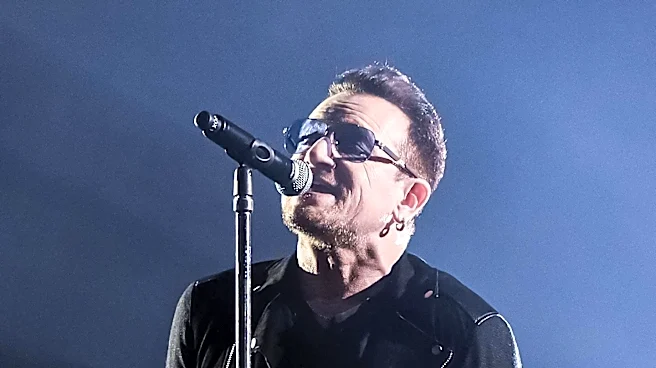
Bono, the frontman of U2, is known for never singing certain songs, such as 'Bad,' the same way twice during live performances, a practice he refers to as 'something I like.' This approach contrasts with the recorded versions of their tracks, which the band
often considers to be definitive 'moments' that should remain untouched. According to Bono, he has 'never sung the exact lyric that is on the record' for some songs, preferring to improvise and adapt the vocals nightly. This creative freedom is facilitated by the consistent musical foundation provided by the other band members, The Edge, Adam Clayton, and Larry Mullen Jr., allowing Bono to experiment with his delivery without the song losing its structure. This practice has been a hallmark of U2's live shows, offering a dynamic experience for audiences.
Why It's Important?
This practice by Bono highlights a significant aspect of live music performance versus studio recordings, particularly for established artists. For U.S. audiences and the broader music industry, it underscores the value placed on unique live experiences. While some purists might prefer exact renditions of recorded material, Bono's approach caters to fans who seek spontaneity and evolution in live shows. This artistic choice can enhance the perceived value of concert tickets, as each performance offers a distinct interpretation. It also influences how other artists might approach their live acts, balancing fidelity to original recordings with the desire for creative expression. The ability of U2 to maintain a high level of performance quality while allowing for such vocal improvisation speaks to their musicianship and stage presence, setting a precedent for dynamic live entertainment.
What's Next?
This ongoing practice by Bono is likely to continue as part of U2's live performance ethos. Future U2 concerts will probably feature these evolving interpretations of their classic songs, maintaining an element of unpredictability for long-time fans. The band's approach could also inspire emerging artists to consider how they present their music live, potentially leading to more improvisational and less rigid performances across the industry. For U2, this strategy helps keep their extensive catalog fresh and engaging for both the band and their audience, ensuring that each tour offers a unique experience rather than a mere replication of their albums. This artistic freedom is a core part of their identity and will likely remain a defining characteristic of their live shows.
Beyond the Headlines
Bono's consistent alteration of live vocals delves into the deeper philosophical debate within music about authenticity and artistic evolution. It challenges the notion that a song's definitive version is solely its studio recording. By treating live performances as living entities, Bono suggests that music is not static but a continuous process of interpretation and re-creation. This approach can foster a more engaged and active listening experience for the audience, as they become part of a unique, unrepeatable moment. Ethically, it raises questions about the artist's responsibility to their recorded work versus their creative impulse. Culturally, it reinforces the idea that live music offers something fundamentally different and often more profound than simply listening to an album, emphasizing the ephemeral and communal aspects of concert-going.