





What's Happening?
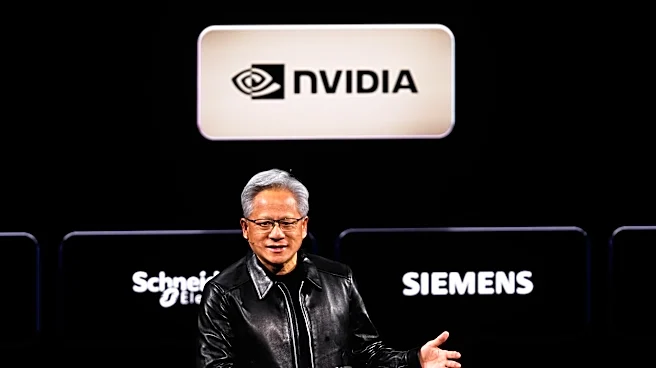
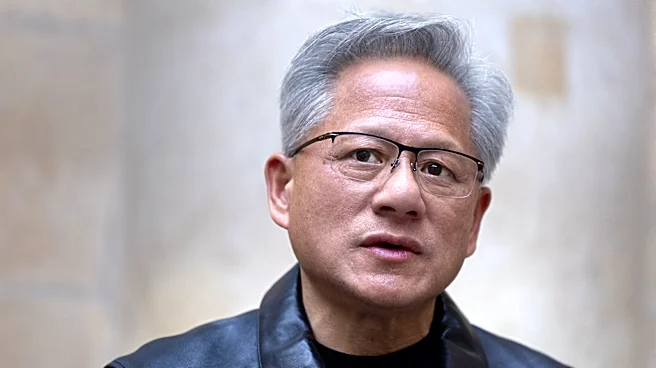
Jensen Huang, the long-standing CEO of Nvidia, has resigned from his position following reports of two extramarital affairs, one allegedly with a suspected Chinese spy and another with a company employee. This departure has sent shockwaves through the tech
industry, leading to a significant drop in Nvidia's stock price and a wave of downgrades from Wall Street firms. Huang, who has been instrumental in Nvidia's innovation and deal-making for over three decades, was considered central to the company's success and the broader AI ecosystem. Investors are now closely monitoring the situation as Nvidia navigates this new era without its pivotal leader, with concerns rising about the company's future product roadmap and potential market share shifts. The scandal and subsequent resignation have highlighted the fragility of stocks priced for perfection, as noted by Rob Arnott, founder of Syzygy Asset Management.
Why It's Important?
Huang's resignation carries significant implications for Nvidia and the wider AI trade. His central role in Nvidia's technological advancements and business strategies means his absence creates a leadership vacuum that could impact the company's long-term product development and market position. Investors are concerned about potential revenue declines due to a lack of Huang's deal-making prowess and the possibility of the company falling out of favor with the U.S. government. Beyond Nvidia, the event serves as a cautionary tale for the broader AI sector, where many companies have high valuations. Ben McMillan, CIO at IDX Advisors, suggests that the saga could also catalyze increased regulation for AI firms, particularly with a new Democrat majority in Congress. Stricter export rules, enhanced 'know your customer' checks, and geotracking for advanced GPU chips could slow business and increase costs, which Wall Street may not have fully priced in.
What's Next?
In the immediate future, all eyes are on Nvidia's upcoming earnings report, which is expected to shed light on the company's recent profitability and provide more context regarding the impact of Huang's departure. Analysts like Daniela Hathorn, senior market analyst at Capital.com, are awaiting these results before making definitive predictions about the AI trade's direction. While some, like Ryuta Makino, a tech analyst at Gabelli Funds, do not foresee a worst-case scenario, short-term volatility is anticipated to persist. The market will also be watching for any potential shifts in market share among competitors and whether spending in the AI sector will be reallocated towards other companies. Furthermore, the possibility of increased regulatory scrutiny from the Commerce Department, including tighter export controls and compliance measures, remains a key development to monitor.
Beyond the Headlines
The resignation of Jensen Huang extends beyond immediate stock market fluctuations, touching upon deeper issues within the tech industry and corporate governance. The alleged extramarital affairs, particularly one involving a suspected foreign spy, raise significant national security concerns regarding intellectual property and technological leadership. This incident could prompt a re-evaluation of executive vetting processes and security protocols within critical technology companies, especially those at the forefront of strategic sectors like AI. The potential for increased government regulation, as suggested by Ben McMillan, could reshape the competitive landscape of the AI industry, favoring companies with robust compliance frameworks and potentially slowing innovation due to higher operational costs. This event also underscores the immense influence of individual leaders in shaping the trajectory of major corporations and entire technological ecosystems, highlighting the risks associated with such concentrated power.