






What's Happening?
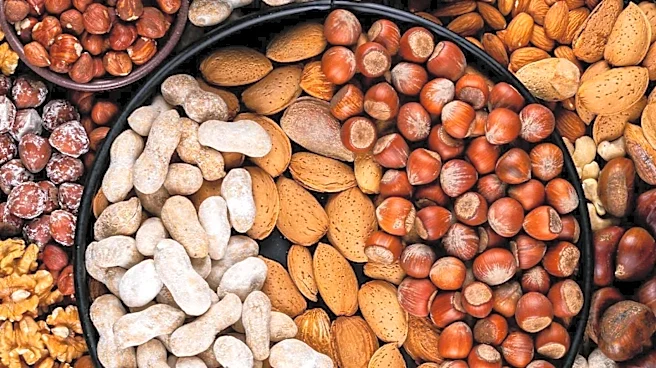
Dietitians are recommending daily nut consumption as a healthy dietary practice, highlighting their rich nutritional profile. Nuts are packed with healthy unsaturated fats beneficial for heart and brain health, plant-based protein (4-6 grams per serving),
and fiber crucial for gut health. This combination of fats, protein, and fiber contributes to satiety, provides steady energy, and makes meals and snacks more satisfying. According to registered dietitian Natalie Rizzo and Shannon Stockero, a dietitian and spokesperson for The Obesity Society, replacing foods high in saturated fats with unsaturated fats found in nuts can improve cholesterol levels and support cardiovascular health. While nuts are calorie-dense, they are also nutrient-dense, offering various vitamins, minerals, and antioxidants. Experts advise paying attention to portion sizes, opting for unsalted varieties, and switching up nut types to gain a broader spectrum of micronutrients.
Why It's Important?
This dietary recommendation is significant for public health in the U.S., where cardiovascular diseases and obesity remain major concerns. Incorporating nuts daily can contribute to a reduction in 'bad' cholesterol, thereby lowering the risk of heart disease. The emphasis on plant-based protein and fiber also aligns with growing dietary trends that promote gut health and sustainable eating patterns. By providing sustained energy and promoting fullness, nuts can play a role in weight management, helping individuals avoid overeating and unhealthy snacking. The advice to vary nut consumption ensures a diverse intake of essential micronutrients, such as vitamin E from almonds, omega-3 fatty acids from walnuts, lutein from pistachios, and selenium from Brazil nuts, each contributing to different aspects of health, from immune function to cognitive health.
What's Next?
Consumers are encouraged to integrate a serving of nuts (approximately one ounce or a small handful) into their daily diet. This can be done by incorporating them into meals like oatmeal or yogurt, using them as garnishes for salads, or consuming them as snacks. The recommendation to choose unsalted, raw, or dry-roasted nuts will likely influence consumer choices and product development in the food industry, with a potential increase in demand for such varieties. Educational efforts from health organizations and dietitians will continue to promote the benefits of nuts while also cautioning against overconsumption due to their calorie density and the importance of avoiding highly processed or sugary nut products. Further research may explore the specific long-term health outcomes of consistent, varied nut intake.
Beyond the Headlines
The promotion of daily nut consumption reflects a broader shift in nutritional science towards emphasizing whole, unprocessed foods and the importance of dietary patterns over individual nutrients. While nuts offer clear benefits, the advice to vary types and control portions subtly addresses the complexity of nutrition, where balance and moderation are key. This guidance also touches upon the challenge of distinguishing between healthy and unhealthy versions of the same food (e.g., unsalted vs. honey-roasted nuts), highlighting the need for consumer education on food labels and ingredients. Furthermore, the discussion of nuts as a plant-based protein source aligns with increasing awareness of sustainable food systems and the environmental impact of dietary choices, suggesting a move towards more plant-forward eating in the U.S. The potential for nut allergies, however, remains a critical consideration, underscoring the need for personalized dietary advice.