







What's Happening?
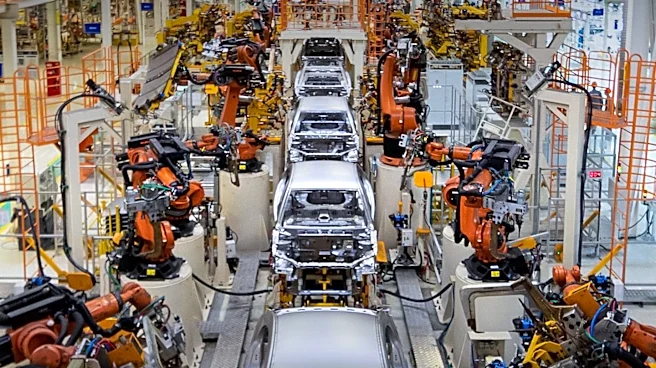
Hyundai Motor is evaluating a substantial increase in its U.S. production capacity at its new Metaplant in Georgia. According to CEO José Muñoz, the company is considering expanding the plant's annual production from 500,000 units to between 700,000 and 800,000
units by 2028. This potential expansion is part of Hyundai's broader plan to invest $26 billion in the U.S. through 2028. The goal is to produce at least 80% of the vehicles sold in the U.S. domestically by the end of the decade, a significant jump from the approximately 40% in 2024. The Georgia Metaplant, initially announced in 2022 with a $7.6 billion investment, is designed to produce hybrid and all-electric vehicles for Hyundai, Genesis, and Kia. It currently manufactures the all-electric Hyundai Ioniq 5 and Ioniq 9, as well as the Kia Sportage hybrid. The current plan for 500,000 units includes over 8,500 employees at the Georgia site and an additional 6,900 at offsite suppliers.
Why It's Important?
This potential expansion by Hyundai signifies a major commitment to U.S. manufacturing and could have substantial economic impacts. If realized, the Georgia Metaplant would become the largest vehicle assembly operation by capacity in the U.S., surpassing facilities from companies like Tesla and Toyota Motor. This move would create thousands of additional jobs, both directly at the plant and indirectly through its supply chain, boosting local and regional economies. It also reflects a strategic shift by Hyundai to localize a larger portion of its production for the U.S. market, potentially mitigating risks associated with international supply chains and trade policies. For the U.S. automotive industry, increased domestic production of electric and hybrid vehicles supports national goals for electrification and reduces reliance on imported vehicles. This investment could also spur further development in related industries, such as battery manufacturing and charging infrastructure, contributing to the growth of the green economy. The decision underscores the U.S. market's importance to global automakers and its attractiveness for significant foreign direct investment.
What's Next?
Hyundai's plans for increased production capacity are currently under consideration and not yet confirmed. However, the company's intention is to have any expanded operations fully functional by 2028. Beyond the Georgia Metaplant, Hyundai is also evaluating additional investments for capacity outside of this facility, specifically for body-on-frame vehicles like trucks and SUVs, though specific details have not been disclosed. The company will continue to assess market opportunities and demand to finalize its production strategies. This ongoing evaluation suggests that further announcements regarding investment and job creation in the U.S. automotive sector could be forthcoming from Hyundai. Stakeholders, including state and local governments in Georgia and other potential investment sites, will likely monitor these developments closely, as increased production capacity translates into significant economic benefits and job growth.
Beyond the Headlines
Hyundai's strategic decision to significantly ramp up U.S. production, particularly in electric and hybrid vehicles, carries deeper implications for the future of the automotive industry and U.S. economic policy. This move aligns with broader global trends towards regionalized manufacturing and could influence other international automakers to similarly increase their domestic production in key markets. It also highlights the growing importance of electric vehicle manufacturing in the U.S., potentially accelerating the transition away from internal combustion engines and contributing to environmental sustainability goals. The emphasis on domestic production could also strengthen U.S. industrial capabilities and technological innovation in the automotive sector. Furthermore, such large-scale investments by foreign companies like Hyundai can foster greater economic interdependence and diplomatic ties between nations, demonstrating confidence in the U.S. as a stable and profitable manufacturing hub. The long-term impact could reshape the competitive landscape of the U.S. auto market, with increased competition and potentially more diverse vehicle offerings for consumers.