

What's Happening?
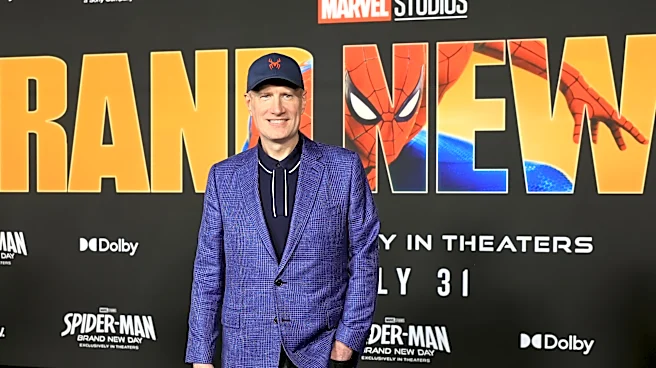
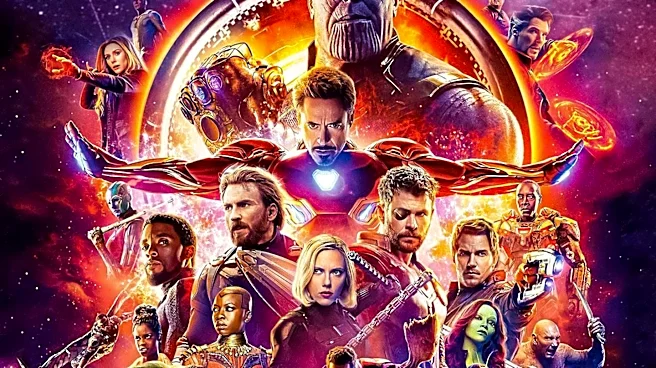
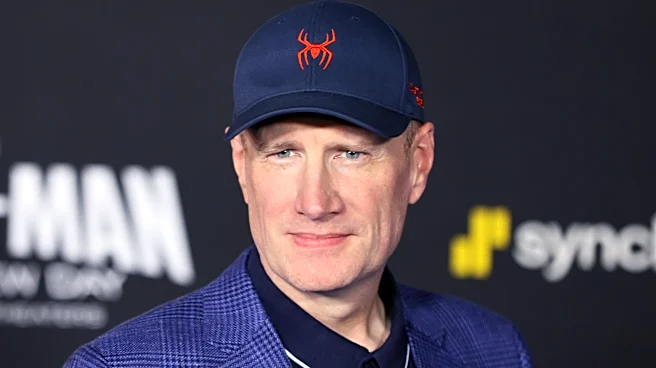
Kevin Feige, the president of Marvel Studios, has addressed the significant challenges associated with recasting actors who have portrayed original Avengers characters. Feige acknowledged the difficulty in replacing actors who have delivered iconic performances,
drawing a parallel to the challenge of replacing Sean Connery as James Bond. This discussion comes amidst ongoing speculation and fan discourse regarding the future of the Marvel Cinematic Universe (MCU) and the potential for new iterations of beloved characters. The sentiment expressed by Feige highlights the deep impact these actors have had on the franchise and its audience, suggesting a cautious approach to such decisions. His comments underscore the studio's awareness of the strong connection fans have with the original cast members and the high bar set by their performances.
Why It's Important?
Feige's remarks are significant for several reasons. Firstly, they offer insight into the strategic thinking at Marvel Studios regarding character longevity and actor contracts, which are crucial for a long-running cinematic universe. The reluctance to recast indicates a potential preference for introducing new characters or finding narrative ways to retire existing ones, rather than directly replacing actors in established roles. This approach could influence future storytelling decisions, potentially leading to more original character introductions or legacy characters taking on new mantles. Secondly, it reflects the immense cultural impact of the original Avengers cast, whose portrayals have become synonymous with the characters themselves. The difficulty in recasting also speaks to the unique bond formed between actors and their roles in the MCU, a phenomenon that few other franchises have achieved to the same extent. This stance could reassure fans who are wary of seeing their favorite characters portrayed by different actors, maintaining a sense of continuity and respect for the original performances.
What's Next?
While Feige's comments do not explicitly outline future plans, they suggest that Marvel Studios will likely proceed with caution regarding any potential recasting of original Avengers. This could mean that if these characters are to return in future narratives, it might be through different iterations, such as multiversal variants, or that the focus will shift to new generations of heroes. The studio may also explore storylines that allow for the natural retirement of characters or the passing of their mantles to new individuals, avoiding direct recasting. Fans can anticipate continued discussions and speculation about how Marvel will navigate the future of its most iconic characters, especially as the MCU continues to expand and evolve. The emphasis on the difficulty of recasting implies that any such decisions would be made with careful consideration of fan sentiment and the legacy of the original actors.
Beyond the Headlines
The discussion around recasting original Avengers extends beyond mere logistical challenges; it touches upon the very nature of character ownership and audience attachment in long-form storytelling. In an era where franchises aim for perpetual existence, the question of how to maintain continuity and audience engagement when key actors move on is paramount. Feige's perspective highlights the unique challenge faced by the MCU, where actors have become deeply intertwined with their characters in the public consciousness. This situation could prompt broader industry conversations about actor contracts, character rights, and the ethical considerations of replacing beloved performers. It also underscores the evolving relationship between studios, actors, and fans, where audience expectations play a significant role in creative decisions. The legacy of these performances may lead to innovative storytelling solutions that honor the past while paving the way for new narratives, rather than simply replacing what came before.