




What's Happening?
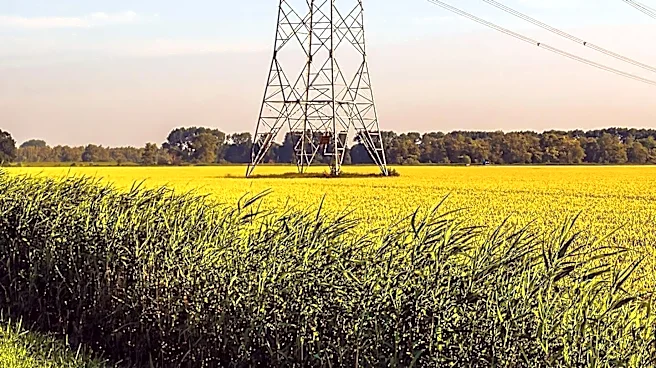
Xcel Energy's subsidiary, SPS, is moving forward with its largest transmission project to date, connecting the Texas Panhandle with southeastern New Mexico. The Texas segment, named 'Tecovas to State Line,' will span approximately 180 miles and include
a significant high-voltage substation near Bushland. The entire multi-stage project is estimated to cost $3.6 billion, with about $1 billion allocated to the Texas portion. The target in-service date for the line is May 2031, following an estimated two years of construction. Jared Cooley, regional vice president of Integrated System Planning, stated that the project aims to alleviate reliability pressures on the regional grid, which is experiencing increased electricity demand due to industrial growth and broader economic development. SPS is currently in the siting and permitting phase, working to determine the final route and secure easements from landowners, with a focus on minimizing disruption.
Why It's Important?
This transmission line project is crucial for enhancing grid reliability in a rapidly growing region of Texas and New Mexico. The increasing electricity use, driven by industrial expansion and economic development, has put significant strain on the existing infrastructure. By building this major transmission line, Xcel Energy aims to ensure a more stable and resilient energy supply for millions of customers across eight states, including Minnesota, Colorado, Wisconsin, Michigan, North Dakota, South Dakota, New Mexico, and Texas. The project's success is vital for supporting continued economic growth and preventing potential power outages. However, the anticipated incorporation of project costs into electric bills, pending regulatory approval in Texas and New Mexico, could lead to higher utility expenses for consumers. This highlights the ongoing challenge of balancing infrastructure investment with affordability for end-users.
What's Next?
Xcel Energy's subsidiary, SPS, will continue with the siting and permitting phase of the 'Tecovas to State Line' project. This involves finalizing the transmission line's route and actively seeking easements from landowners. Cooperation with landowners is identified as a key factor for the successful construction of the line, and SPS is working to minimize impacts on properties. While the project's target in-service date is May 2031, the exact implications for customer bills remain uncertain. Xcel Energy has indicated that project costs would only be reflected in electric bills after the line is energized and only if regulators in Texas and New Mexico approve how these charges are applied. Therefore, any precise estimate of bill changes is considered premature at this stage.
Beyond the Headlines
The advancement of Xcel Energy's transmission line project underscores the broader national challenge of modernizing and expanding energy infrastructure to meet growing demand and support the clean energy transition. While essential for reliability and economic development, such large-scale projects often face complex issues, including environmental impact assessments, eminent domain concerns, and the equitable distribution of costs among consumers. The emphasis on landowner cooperation highlights the social dimension of infrastructure development, where community engagement and minimizing disruption are critical for project acceptance and success. Furthermore, the regulatory approval process for cost recovery will be a significant point of contention, as it directly impacts the financial burden on households and businesses, potentially influencing public perception of clean energy initiatives and infrastructure investments.