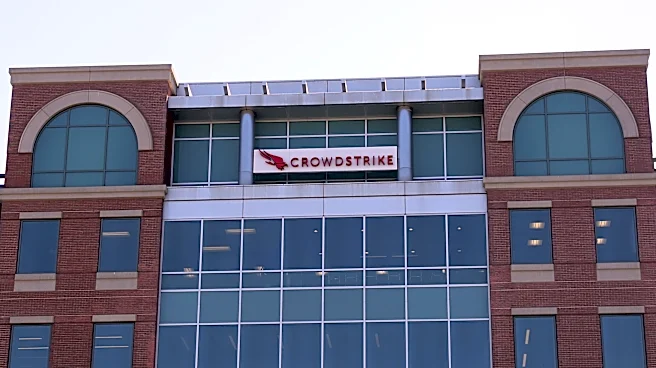







What's Happening?
CrowdStrike and Zscaler have announced a definitive agreement for CrowdStrike to acquire Zscaler in an all-stock transaction valued at approximately $43.9 billion. Under the terms of the agreement, Zscaler shareholders will receive 1.135 shares of CrowdStrike common
stock for each share of Zscaler common stock they own. Following the transaction's close, Jay Chaudhry, Zscaler's CEO, chairman, and founder, will continue to lead the Zscaler business and join CrowdStrike’s Board of Directors. This acquisition aims to integrate Zscaler's Zero Trust SASE, security for AI, and data protection capabilities into CrowdStrike's Falcon platform. The deal is expected to close in the second half of CrowdStrike’s fiscal year 2028, pending approval from Zscaler shareholders, regulatory approvals, and other customary closing conditions. Chaudhry and his affiliates, who collectively hold about 34% of Zscaler's outstanding shares, have entered into voting agreements to support the transaction. Until the closing, both companies will operate independently.
Why It's Important?
This acquisition is significant as it will allow CrowdStrike to enter the network security market, which is a substantial segment of the cybersecurity industry. The combined entity aims to offer a unified platform that integrates endpoint security with Zero Trust SASE, addressing the evolving threat landscape in the AI era. With AI agents becoming a new vulnerability, the merger seeks to provide superior protection by combining CrowdStrike's focus on securing endpoints, workloads, identities, and data with Zscaler's expertise in protecting connections between them. The deal is expected to expand CrowdStrike's total addressable market by over $185 billion by calendar year 2029 and unlock cross-selling opportunities across both companies' customer bases, including approximately 8,000 Zscaler customers not yet using CrowdStrike. This strategic move is poised to create a more comprehensive cybersecurity solution for enterprises navigating the complexities of AI adoption and distributed work environments.
What's Next?
The transaction is slated for completion in the second half of CrowdStrike’s fiscal year 2028, contingent on Zscaler shareholder approval and necessary regulatory clearances. Until then, both CrowdStrike and Zscaler will maintain independent operations. Post-acquisition, Jay Chaudhry will continue to lead Zscaler and join CrowdStrike’s board, ensuring continuity in leadership for the acquired entity. The integration of Zscaler’s Zero Trust SASE capabilities into CrowdStrike’s Falcon platform is expected to proceed, aiming to offer customers a single platform, data layer, and contract. The combined company anticipates achieving approximately $1 billion in annualized run-rate revenue synergies within 30 months post-closing, driven by deeper customer relationships and expanded cross-selling. Additionally, $500 million in annualized run-rate cost synergies are expected within 18 to 24 months, primarily through operational optimizations. The combined entity is projected to begin with over $10 billion in annual recurring revenue (ARR) at closing.
Beyond the Headlines
This acquisition represents a significant consolidation within the cybersecurity industry, highlighting the increasing demand for integrated security solutions that can address complex, multi-faceted threats, especially those emerging from the widespread adoption of AI. The emphasis on 'Zero Trust Everywhere' and securing AI agents underscores a fundamental shift in cybersecurity paradigms, moving away from traditional perimeter-based defenses to a more granular, identity-centric approach. The merger could set a new standard for how cybersecurity platforms are designed and delivered, pushing competitors to also integrate endpoint and network security more seamlessly. Furthermore, the creation of a single control plane for deploying, controlling, and securing AI applications suggests a future where cybersecurity is intrinsically linked to AI governance and operational safety, potentially influencing regulatory frameworks and industry best practices for AI deployment in enterprises.