







What's Happening?
The global market for 5G in agriculture is experiencing significant growth, driven by the adoption of precision agriculture and advanced connectivity solutions. The market, which was valued at $3.88 billion in 2025, is projected to reach $5.11 billion in 2026,
with a compound annual growth rate (CAGR) of 31.6%. This expansion is fueled by the integration of digital farming technologies, which enhance crop management and irrigation practices. Key players in the market, such as Microsoft Corp., Intel Corp., and Samsung Electronics, are contributing to this growth through innovations in hardware and software solutions. The use of 5G technology facilitates real-time data transmission and IoT connectivity, which are crucial for precision agriculture practices, including crop and livestock monitoring. The market is expected to continue its upward trajectory, reaching $15.18 billion by 2030.
Why It's Important?
The adoption of 5G technology in agriculture is transforming the industry by enabling more efficient and sustainable farming practices. Precision agriculture, supported by real-time data and connectivity, allows farmers to optimize resource use, increase crop yields, and reduce environmental impact. This technological advancement is particularly significant in the context of global food security and climate change, as it offers solutions to enhance productivity while minimizing resource consumption. The growth of the 5G agriculture market also presents economic opportunities, as it stimulates local manufacturing and innovation in smart agriculture technologies. However, challenges such as tariffs on imported technologies could impact costs, particularly in regions like Asia Pacific and Europe.
What's Next?
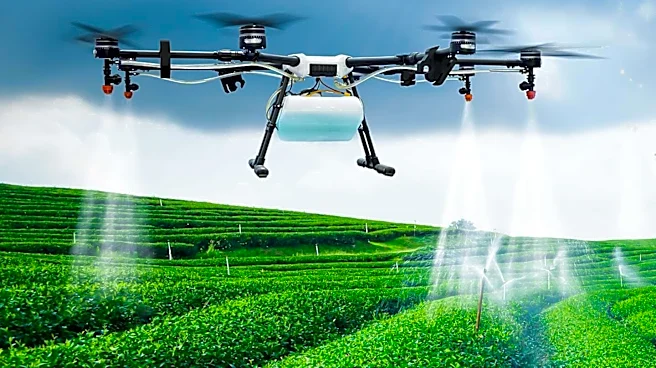
As the 5G in agriculture market continues to grow, stakeholders can expect further advancements in digital farming technologies. Companies are likely to increase investments in research and development to enhance the capabilities of smart machinery, drones, and automated farms. Additionally, collaborations between technology providers and agribusinesses will play a crucial role in driving the adoption of Industry 4.0 practices in agriculture. Policymakers may also need to address regulatory challenges and support infrastructure development to facilitate the widespread implementation of 5G technologies in rural areas.
Beyond the Headlines
The integration of 5G technology in agriculture not only improves efficiency but also has broader implications for rural development and economic growth. By enabling better connectivity in remote areas, 5G can enhance access to information and services, contributing to the overall well-being of rural communities. Furthermore, the shift towards data-driven agriculture could lead to new business models and job opportunities in the tech and agricultural sectors. As the industry evolves, ethical considerations around data privacy and security will also need to be addressed to ensure the responsible use of technology in farming.