





What's Happening?
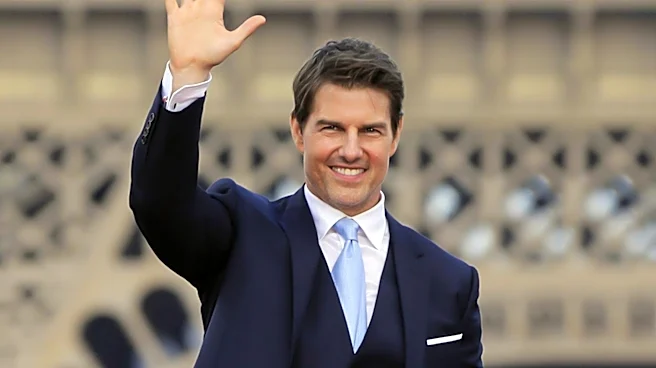
Actor Rob Lowe has revealed that Tom Cruise was his primary 'nemesis' during the 1980s and 1990s, as they frequently competed for the same blockbuster film roles. Lowe recounted instances where he would read scripts for major projects like 'Jerry Maguire'
and 'Top Gun,' only to find out that Cruise had secured the leading part. Despite missing out on these significant roles, Lowe established himself as a prominent member of the 'Brat Pack,' starring in films such as 'St. Elmo's Fire,' 'The Outsiders,' 'Class,' and 'Oxford Blues.' He also expressed regret over never being cast in a John Hughes movie, attributing it to his already established fame, which he believes Hughes avoided in favor of lesser-known actors.
Why It's Important?
Rob Lowe's reflections on his competition with Tom Cruise offer a unique insight into the highly competitive nature of Hollywood during a pivotal era for film. This rivalry highlights how a few dominant actors can significantly influence casting decisions for major productions, shaping the careers of their peers. For the entertainment industry, it underscores the intense pressure actors face to secure leading roles and the impact these decisions have on their career trajectories and public perception. It also sheds light on the subjective criteria directors like John Hughes used for casting, prioritizing fresh faces over established stars. This dynamic illustrates the constant struggle for visibility and opportunity in a demanding industry, where even successful actors like Lowe faced significant hurdles in securing certain coveted parts.
What's Next?
Rob Lowe's candid remarks are likely to spark renewed interest in the casting processes of classic 1980s and 1990s films, potentially leading to more discussions or retrospectives on how iconic roles were filled. This revelation might also encourage other actors from that era to share their own experiences with competition and missed opportunities, offering further insights into the industry's dynamics. For Lowe, this could be part of a broader narrative he is sharing about his career, possibly in a memoir or documentary, providing context to his journey in Hollywood. The discussion could also prompt a re-evaluation of the 'Brat Pack' era, highlighting the individual struggles and triumphs of its members beyond their collective identity.
Beyond the Headlines
Rob Lowe's narrative about competing with Tom Cruise for roles touches upon deeper themes of ambition, professional rivalry, and the psychological impact of constant comparison in high-stakes industries. It highlights the often-unseen pressures faced by individuals striving for success in competitive fields, where talent alone may not guarantee desired outcomes. This story also subtly explores the concept of 'what if' in career paths, prompting reflection on how different choices or circumstances could have altered an actor's trajectory. Furthermore, Lowe's explanation for not being cast by John Hughes—that he was 'too well known'—reveals an interesting paradox in the entertainment industry: sometimes, being too successful in one niche can close doors in another, illustrating the complex interplay between fame, typecasting, and artistic vision.