










What's Happening?
The Federal Reserve's preferred inflation measure, the Personal Consumption Expenditures (PCE) Price Index, has reached a three-year high, rising to 4.1% in May. This increase is in line with expectations and up from 3.8% in April. The core PCE, which
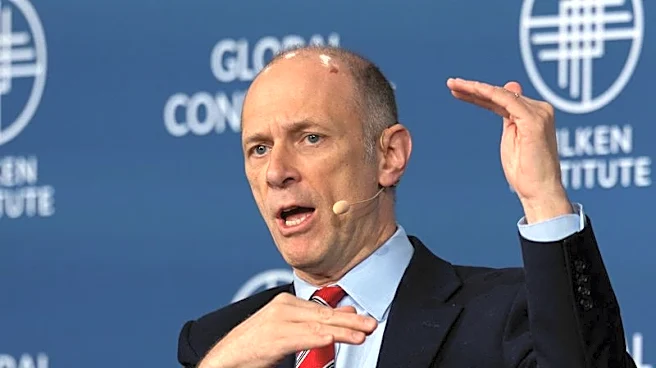
excludes volatile food and energy prices, also rose to 3.4%. This persistent inflation is prompting the Federal Reserve to consider holding interest rates steady in the short term, with a potential rate hike if inflation does not subside. The Fed aims to achieve a 2% inflation target, but current projections suggest that headline PCE will end the year at 3.6%, with core PCE at 3.3%. New York Federal Reserve President John Williams anticipates inflation to decrease in the coming quarters, contingent on the resolution of supply disruptions.
Why It's Important?
The rising inflation poses significant challenges for the U.S. economy, affecting consumer purchasing power and potentially leading to higher interest rates. A rate hike could slow economic growth by increasing borrowing costs for businesses and consumers. However, maintaining steady rates might allow inflation to persist, eroding savings and fixed incomes. The Federal Reserve's decisions will have broad implications for financial markets, influencing investment strategies and economic forecasts. Stakeholders, including businesses and policymakers, must navigate these uncertainties as they plan for the future.
What's Next?
The Federal Reserve is expected to hold interest rates steady in July, with a significant likelihood of a rate hike in September if inflation remains high. The central bank will closely monitor economic indicators, including energy prices and supply chain disruptions, to inform its decisions. Market participants and policymakers will be watching for any signals from the Fed regarding its monetary policy stance, as these will impact economic planning and investment strategies.