



What's Happening?
Waze, the community-based traffic and navigation application owned by Google, is expanding its local advertising capabilities for businesses. The platform now allows businesses to promote their locations directly to drivers who are searching for businesses or navigating
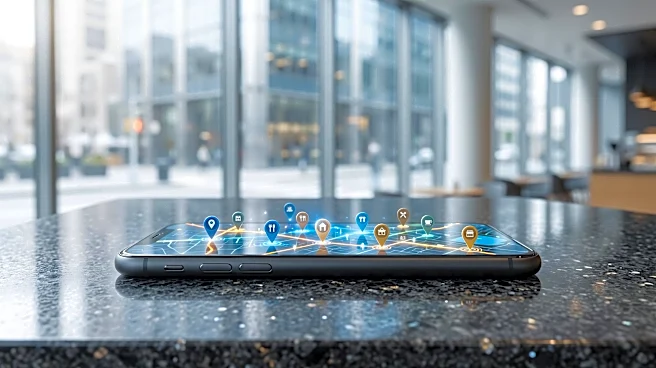
along their routes. These advertisements appear as 'promoted places' or location-based square pins on the user's driving map. Tapping these pins provides users with more details about the business, such as opening hours, address, images, videos, and reviews. This feature aims to help businesses capture the attention of potential customers when they are in close proximity or actively seeking services. Waze Ads are currently integrated with Google Ads' Performance Max campaigns, specifically for shop goal campaigns focused on driving shop visits, shop sales, or local actions like directions. This integration allows businesses to leverage their Google Business Profile information to create rich, engaging ad formats on Waze, Google Maps, and Google Search.
Why It's Important?
This enhancement is significant for U.S. businesses, particularly those with physical locations, as it offers a direct channel to reach consumers on the go. By appearing prominently on Waze, businesses can increase their visibility to drivers who are actively navigating or searching for nearby services, potentially leading to increased foot traffic and sales. The integration with Google Ads' Performance Max campaigns streamlines the advertising process, allowing businesses to manage their local ad campaigns across multiple Google platforms from a single interface. This can be particularly beneficial for small and medium-sized businesses looking to optimize their local marketing efforts without extensive resources. The cost-per-click (CPC) model for various ad interactions, such as clicks on headlines, map pins, or action buttons, provides a measurable return on investment for advertisers, enabling them to track the effectiveness of their campaigns in driving local engagement and conversions.
What's Next?
Businesses utilizing Google Ads and Waze can expect to see continued evolution in local advertising features, with potential for more sophisticated targeting options and analytics. As Waze further integrates with Google's broader advertising ecosystem, there may be opportunities for businesses to create more personalized ad experiences based on user behavior and location data. Advertisers should focus on optimizing their Google Business Profiles with high-quality, up-to-date information and engaging visuals, as these assets directly feed into the Waze ad formats. Future developments might include enhanced reporting metrics for in-store visits and calls generated through Waze ads, providing businesses with deeper insights into their campaign performance. The emphasis on Performance Max campaigns suggests a continued push towards AI-powered optimization for local business goals.
Beyond the Headlines
The expansion of local advertising on Waze highlights a broader trend in digital marketing: the increasing importance of location-based services and real-time engagement. As consumers rely more on navigation apps for daily travel, these platforms become critical touchpoints for businesses to connect with potential customers. This development also raises considerations about data privacy and user experience, as the line between navigation and advertising becomes more integrated. For Waze, leveraging its vast user base and real-time traffic data for advertising creates a powerful revenue stream while offering a valuable service to businesses. The success of these ad formats will depend on their ability to provide relevant information to drivers without becoming intrusive, maintaining a balance between commercial interests and user satisfaction. This strategy underscores the value of proprietary, real-time data in creating unique advertising opportunities that competitors may find difficult to replicate.