







What's Happening?
U.S. Representative Mary Gay Scanlon, who represents Pennsylvania's 5th congressional district, has commented on the significant expansion of the Port of Philadelphia. This expansion involves a substantial investment of $837 million, combining state,
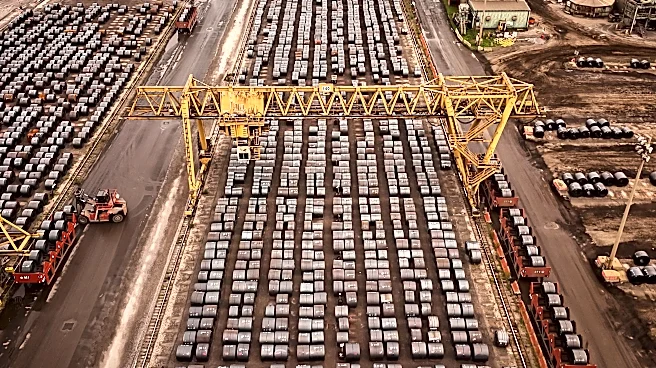
federal, and private funds. According to Scanlon, this public and private investment in South Philadelphia signals a promising future for economic development across the region. The project is projected to create approximately 6,000 new jobs, adding to the existing 8,000 jobs in and around PhilaPort. The expansion aims to attract new businesses, increase cargo volume, and solidify Philadelphia's position as a key hub for global trade. Scanlon emphasized that this investment demonstrates a strong vote of confidence in the industrial future and the workforce of the region. The state's capital funds amount to $371 million, complemented by $466 million from private investment and federal grants, including $266 million in federal funds, some of which Scanlon helped secure through U.S. Department of Transportation grants. The expansion plans include transforming the 152-acre Mustin Yard parcel for auto and container cargo, adding a new docking berth, and other infrastructure improvements.
Why It's Important?
This major expansion of the Port of Philadelphia holds significant importance for the U.S. economy, particularly for the Mid-Atlantic region. The creation of 6,000 new jobs will provide substantial employment opportunities, boosting local economies and potentially reducing unemployment rates in the area. The increased cargo and auto capacity, projected to rise by 122% and 18% respectively, will enhance the efficiency of the nation's supply chain. This improvement can lead to faster and more reliable movement of goods, benefiting businesses that rely on imports and exports, and potentially lowering costs for consumers. By strengthening Philadelphia's role as a global trade hub, the expansion can attract more international business and investment, further integrating the U.S. into global trade networks. The combination of public and private funding underscores a collaborative approach to infrastructure development, setting a precedent for future large-scale projects. This investment also highlights the strategic importance of port infrastructure in maintaining economic competitiveness and supporting various industries, from manufacturing to life sciences, by ensuring access to essential raw materials and spare parts.
What's Next?
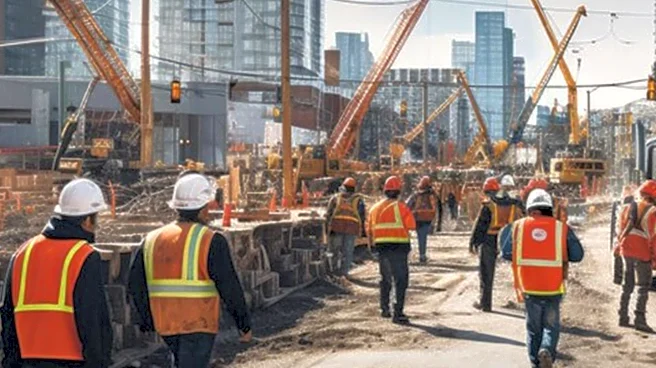
Construction on the Port of Philadelphia expansion is anticipated to commence once permitting and contracting terms are finalized, with ground-breaking expected in early 2027. The project will involve dredging, land acquisition, infrastructure improvements, and the installation of new cranes and equipment. A key component is the construction of a new 2,000-foot berth at Southport Marine Terminal, marking the first new port space in over 50 years. This development is expected to significantly increase the port's capacity for both container and auto cargo. PhilaPort officials project that the expansion will generate an additional $45 million in state and local taxes annually. The success of this project could encourage further public-private partnerships in infrastructure development across other U.S. ports, potentially leading to a broader modernization of the nation's trade infrastructure. Stakeholders, including local businesses, labor unions, and government entities, will likely monitor the project's progress closely, anticipating the economic benefits and job creation it promises.
Beyond the Headlines
The Port of Philadelphia expansion transcends immediate economic benefits, touching upon deeper implications for regional identity and long-term economic resilience. Philadelphia Mayor Cherelle Parker's remarks about the city adding to its 'eds and meds' title by embracing its historical role as the 'Workshop of the World' highlight a strategic re-emphasis on industrial and maritime sectors. This shift suggests a broader recognition of the importance of diverse economic pillars beyond traditional higher education and healthcare. The project's reliance on a strong union base, as noted by Congresswoman Scanlon, also underscores the enduring role of organized labor in large-scale infrastructure projects and its contribution to workforce development. Ethically, the creation of thousands of jobs, particularly those that do not require a college degree, addresses issues of economic equity and opportunity for a wider segment of the population. The long-term success of this expansion could serve as a model for other legacy industrial cities seeking to revitalize their economies through strategic infrastructure investments and a renewed focus on global trade and manufacturing capabilities.