






What's Happening?
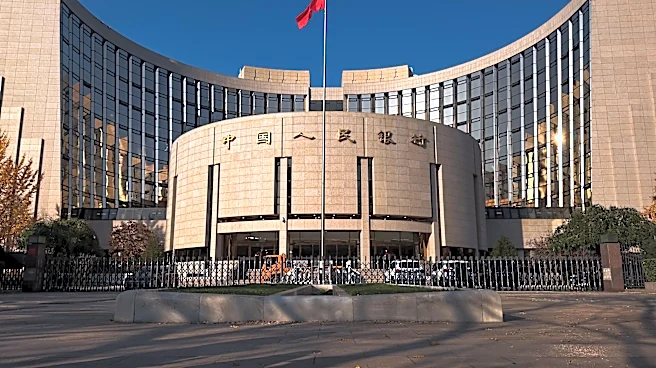
The People's Bank of China (PBOC) is set to conduct an 800-billion-yuan (approximately 119.21 billion U.S. dollars) medium-term lending facility (MLF) operation. This action aims to maintain ample liquidity within the banking system. The one-year MLF operation will
utilize a fixed-quantity, interest-rate bidding process with multiple-price winning bids. This operation will result in a net withdrawal of 200 billion yuan from the banking system, as a previous 1-trillion-yuan operation is scheduled to mature this month. Additionally, the PBOC has plans for a 500-billion-yuan, seven-day reverse repo operation. The MLF, established in 2014, serves to assist commercial and policy banks in managing their liquidity by enabling them to borrow from the central bank using securities as collateral.
Why It's Important?
This liquidity injection by the People's Bank of China is crucial for maintaining stability in China's financial markets, which can have ripple effects on global economies, including the U.S. A stable Chinese banking system helps ensure the smooth flow of trade and investment, benefiting U.S. businesses that operate in or trade with China. Conversely, any significant liquidity crunch in China could lead to economic slowdowns, impacting global supply chains and potentially reducing demand for U.S. goods and services. The net withdrawal of 200 billion yuan, despite the large injection, indicates a calibrated approach to monetary policy, aiming to prevent excessive liquidity while still supporting economic activity. This balancing act is vital for China's economic health and, by extension, for the global economic environment that the U.S. is deeply integrated into.
What's Next?
The PBOC's ongoing liquidity operations suggest a continued focus on managing financial conditions to support economic growth. Future actions will likely involve further MLF operations and reverse repos, adjusted based on market liquidity needs and broader economic indicators. Businesses and investors with exposure to the Chinese market will closely monitor these operations for signals regarding China's monetary policy stance. The effectiveness of these measures in maintaining ample liquidity and supporting economic stability will be a key factor in China's economic performance in the coming months, influencing global financial markets and trade dynamics.
Beyond the Headlines
The PBOC's use of MLF operations highlights a broader trend among central banks to employ a range of tools beyond traditional interest rate adjustments to manage liquidity and influence economic activity. This approach allows for more targeted interventions in specific sectors or to address particular market conditions. The careful balancing act of injecting and withdrawing liquidity reflects the complexities of managing a large and interconnected economy like China's, especially in a global environment marked by economic uncertainties. The transparency and predictability of these operations are crucial for market confidence, both domestically and internationally, underscoring the PBOC's role as a significant player in global financial stability.