









What's Happening?
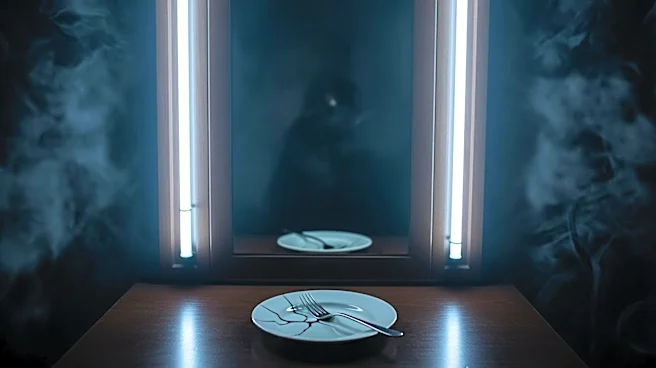
John Early's film 'Maddie’s Secret' is a neo-noir homage to 1980s and 1990s TV movies, particularly inspired by the 1986 NBC original 'Kate’s Secret'. The film stars Early as Maddie, a dishwasher at a cooking channel who becomes an on-screen talent after
a viral recipe success. The storyline delves into Maddie's struggle with bulimia, a condition she thought she had overcome, which resurfaces under the pressures of newfound fame. The film is noted for its unique blend of humor and serious themes, capturing the absurdity of Maddie's situation without parodying the source material. The narrative also critiques millennial foodie culture, highlighting the superficiality and competition inherent in online fame.
Why It's Important?
The film 'Maddie’s Secret' is significant as it addresses the serious issue of eating disorders within the context of modern media culture. By blending humor with a serious subject, it opens a dialogue about the pressures of online fame and the impact of societal expectations on personal health. The film's critique of millennial foodie culture also sheds light on the often overlooked negative aspects of influencer lifestyles, such as the pressure to maintain a certain image. This approach can resonate with audiences who are familiar with the dual nature of social media, where public personas often mask personal struggles.
What's Next?
As 'Maddie’s Secret' gains attention, it may spark further discussions on the portrayal of eating disorders in media and the responsibilities of content creators in addressing such issues. The film could influence future productions to explore serious topics with a balance of humor and sensitivity, potentially leading to more nuanced portrayals of mental health issues. Additionally, the film's critique of influencer culture might encourage viewers to critically assess the content they consume and the impact it has on their perceptions of success and self-worth.
Beyond the Headlines
Beyond its immediate narrative, 'Maddie’s Secret' challenges the traditional boundaries of genre by combining elements of comedy and drama in a neo-noir setting. This innovative approach could inspire filmmakers to experiment with genre conventions, leading to more diverse storytelling methods. The film also highlights the cultural shift towards more inclusive and varied representations of personal struggles, reflecting a broader societal move towards understanding and empathy in media portrayals.