






What's Happening?
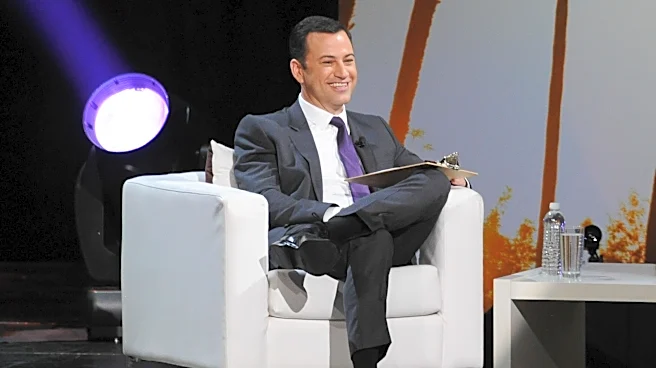
Jimmy Fallon of NBC's 'The Tonight Show' and Jimmy Kimmel of ABC's 'Jimmy Kimmel Live!' are characterized by a relationship of mutual professional respect, despite being competitors in the late-night television landscape. Public discourse surrounding
their interactions consistently highlights camaraderie rather than rivalry. While Fallon's show emphasizes musical numbers and celebrity games, Kimmel's program leans towards observational humor and social commentary, utilizing segments like 'Mean Tweets.' Both hosts have adapted to the evolving television landscape, which has shifted from a singular dominant voice to a fragmented ecosystem. Their rapport is rooted in shared experiences, including demanding production schedules and the constant need for viral content. During the COVID-19 pandemic, both hosts adapted to remote broadcasting and engaged in informal check-ins regarding safety protocols and creative challenges, solidifying their alliance in the survival of the late-night medium. Fallon has publicly praised Kimmel's ability to pivot to topical and political humor, acknowledging its complementary role to 'The Tonight Show's' lighter tone.
Why It's Important?
The professional relationship between Jimmy Fallon and Jimmy Kimmel is significant as it reflects a broader shift in the competitive dynamics of the U.S. late-night television industry. Historically, late-night was marked by intense rivalries, but the current environment, driven by internet consumption and social media, fosters a more collaborative atmosphere. This mutual respect allows for a healthier ecosystem where guest stars can move between shows without network loyalty conflicts, benefiting both hosts and the broader entertainment industry. Their shared experience in navigating the pressures of daily talk shows, guest coordination, and the demand for viral segments underscores the challenges of maintaining relevance in modern media. The ability of these prominent figures to publicly support each other helps to validate the late-night talk show as a professional craft, especially during periods when executives might consider reducing such programming in favor of lower-cost alternatives. This dynamic also influences audience perception, promoting a sense of unity within the genre rather than fostering divisive 'wars' that characterized past eras.
What's Next?
The established dynamic of mutual respect between Jimmy Fallon and Jimmy Kimmel is likely to continue, influencing future collaborations and industry interactions. As the late-night television landscape further evolves with changing viewership habits and digital platforms, their collegial relationship could serve as a model for other hosts. Future industry events, such as writers' strikes or significant societal shifts, may see them, and potentially other late-night hosts, collaborating again, similar to their 'Strike Force Five' podcast during the 2023 WGA strike. This ongoing professional camaraderie could lead to more cross-network appearances or joint initiatives, further solidifying the perception of late-night hosts as allies rather than fierce rivals. Their continued success and longevity in a volatile market will likely reinforce the importance of professional etiquette and mutual support within the entertainment industry, potentially setting a precedent for how competitors in other media sectors interact.
Beyond the Headlines
The relationship between Fallon and Kimmel extends beyond simple professional courtesy, touching upon deeper implications for media consumption and industry resilience. Their ability to maintain respect despite network competition highlights a maturation of the entertainment industry, moving away from manufactured rivalries that once dominated media narratives. This shift reflects a broader understanding that in a fragmented media landscape, the success of one entity does not necessarily detract from another; instead, it can contribute to the overall health and relevance of the genre. Ethically, their conduct promotes a positive image of collaboration over cutthroat competition, potentially influencing younger talent entering the industry. Culturally, their shared approach to late-night, while stylistically different, collectively provides a diverse range of comedic and topical commentary for American audiences. This collaborative spirit could also be seen as a strategic adaptation to the challenges posed by streaming services and on-demand content, where traditional linear television faces increasing pressure to innovate and retain viewership.