








What's Happening?
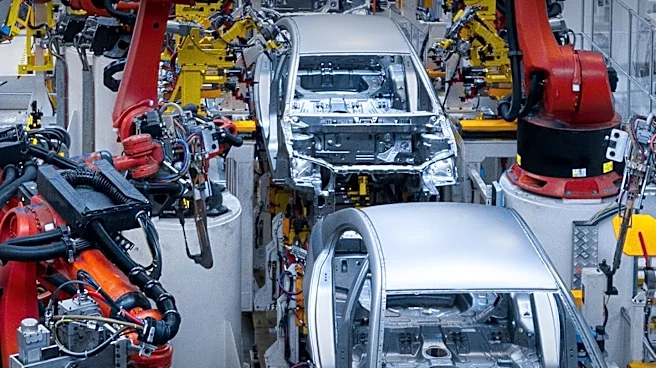
Manufacturers are increasingly integrating Generative AI (GenAI) into their operations to enhance efficiency and sustainability. GenAI is being used to simulate, model, and optimize resource usage, which helps in reducing waste, improving energy efficiency,
and accelerating progress toward circular economy and net-zero targets. This technology allows manufacturers to anticipate defects and performance issues before full production, reducing scrap rates and material waste. Additionally, digital twins are being employed to model and optimize energy use across production lines, providing greater visibility into energy consumption and opportunities for efficiency improvements. The focus is on preventing waste at the source rather than managing it post-production, which is a significant shift in industrial transformation.
Why It's Important?
The integration of AI in manufacturing is crucial as it addresses both economic and environmental challenges. By reducing material waste and improving energy efficiency, manufacturers can significantly cut costs, which is vital in sectors where material waste can account for up to 30% of costs. Moreover, the move towards sustainable practices aligns with global efforts to combat climate change and meet net-zero emissions targets. This shift not only enhances operational efficiency but also positions manufacturers as leaders in sustainable practices, potentially giving them a competitive edge in the market. The ability to make data-driven decisions through AI can lead to more resilient supply chains and better resource management, which are critical in today's rapidly changing economic landscape.
What's Next?
As AI continues to evolve, manufacturers are expected to further integrate these technologies into their operations. The focus will likely expand to include more comprehensive lifecycle management of products, from sourcing to recycling. This could involve greater accountability for manufacturers under evolving Extended Producer Responsibility (EPR) regulations, which require them to manage the entire lifecycle of their products. Additionally, as Industry 5.0 gains traction, there will be a shift towards more human-centric and sustainable manufacturing processes, with AI serving as an intelligent partner in this collaborative environment. Manufacturers that strategically embed AI capabilities into their supply chains will likely see long-term growth and sustainability benefits.