








What's Happening?
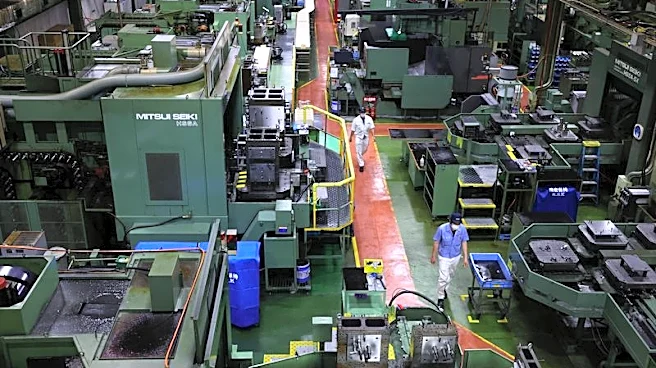
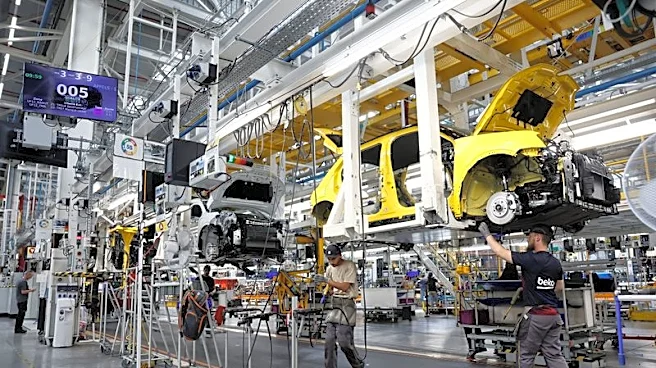
Turkey's manufacturing sector experienced a worsening slowdown in the first month of the final quarter of the year, according to the Istanbul Chamber of Industry Türkiye Manufacturing Purchasing Managers’ Index (PMI) published on November 2. Difficult
market conditions led to sharper moderations in both output and new orders. Andrew Harker, economics director at S&P Global Market Intelligence, noted that Turkish manufacturers are struggling to generate growth due to muted demand, sharply rising prices, and lengthening supplier delivery times. Inflationary pressures, driven by higher oil prices, rising raw material costs, and unfavorable exchange rate movements, continue to hinder operations, despite a slight easing in the rate of inflation from September. Vendor performance has deteriorated monthly over the past year, with the latest extension of lead times being modest.
Why It's Important?
The deepening manufacturing slowdown in Turkey, a key NATO ally and economic partner, has potential implications for global supply chains and U.S. businesses operating internationally. Persistent inflation and muted demand in Turkey could reduce its capacity as a manufacturing hub, affecting companies that source goods or components from the region. The challenges faced by Turkish manufacturers, including rising input costs and extended delivery times, reflect broader global economic headwinds that can impact international trade and investment. While the immediate impact on the U.S. economy might be indirect, a prolonged downturn in a significant emerging market like Turkey could contribute to global economic instability, potentially affecting U.S. export markets or investment opportunities. The situation also highlights the ongoing struggle many economies face in balancing inflation control with maintaining economic growth.
What's Next?
The Turkish manufacturing sector will likely continue to face challenges in the near term, with demand remaining muted and inflationary pressures persisting. The modest easing in employment figures might offer some limited support to output in the coming months, but a significant recovery is not immediately apparent. Policymakers in Turkey will need to address the root causes of inflation and muted demand to stabilize the manufacturing sector. The global economic environment, particularly oil prices and raw material costs, will continue to play a crucial role in shaping Turkey's manufacturing outlook. Businesses with ties to Turkey will need to monitor these economic indicators closely and adjust their strategies to mitigate risks associated with ongoing inflationary pressures and supply chain disruptions.
Beyond the Headlines
The manufacturing slowdown in Turkey is indicative of a broader global economic environment characterized by persistent inflation, supply chain vulnerabilities, and uneven demand. This situation underscores the interconnectedness of national economies and how local challenges can ripple through international markets. The struggle to balance economic growth with inflationary pressures is a common theme across many countries, and Turkey's experience offers insights into the complexities of managing these dynamics. The reliance on global commodity prices, such as oil and raw materials, also highlights the external vulnerabilities of manufacturing sectors. This scenario could prompt businesses to re-evaluate their supply chain resilience and explore diversification strategies to reduce dependence on regions facing significant economic headwinds.