






What's Happening?
The necessity of specialized trail running shoes depends significantly on the terrain, according to recent insights into trail footwear. For wide, flat dirt paths, well-graded rail-trails, and dry park loops that are smooth and free of sharp rocks, regular
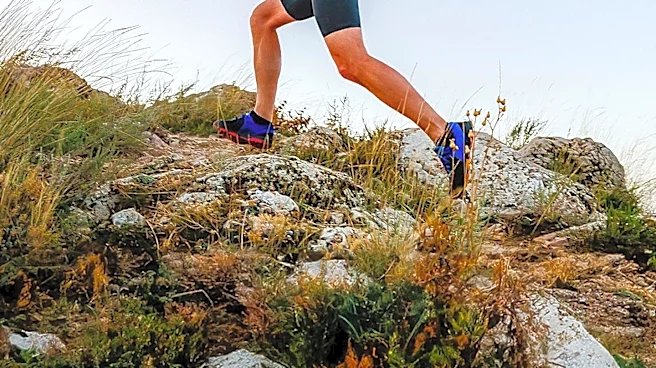
road running shoes are generally sufficient. However, for mixed terrains that transition from city pavement to gravel service roads, hardpack switchbacks, and technical climbs, trail running shoes are recommended. These specialized shoes offer enhanced cushioning, energy return, adaptable traction, and underfoot protection to manage repeated impacts and varied surfaces. Technical trails, characterized by rocks, roots, and other obstacles, particularly benefit from trail shoes equipped with reinforced toe caps, durable uppers, and additional underfoot protection to prevent discomfort or injury. The key is matching the shoe's features, such as outsole grip, midsole cushioning, and durability, to the specific conditions of the trails most frequently run.
Why It's Important?
The choice of appropriate footwear for trail running has direct implications for runner safety, performance, and injury prevention. Utilizing road running shoes on technical or mixed terrains can lead to inadequate grip, increasing the risk of slips and falls, and insufficient protection against sharp objects, potentially causing foot injuries. For endurance runners, the right trail shoes can significantly reduce fatigue and discomfort over long distances by providing superior shock absorption and stability. This distinction is crucial for the growing community of trail runners in the U.S., as it guides purchasing decisions and training practices. Investing in suitable trail running shoes can enhance the overall running experience, allowing athletes to tackle more challenging routes with confidence and minimize the physical toll on their bodies, thereby promoting sustained participation in the sport.
What's Next?
As trail running continues to gain popularity, particularly with events like the 'Trailsgiving' races in Elysian Park, Los Angeles, scheduled for November 14, 2026, the demand for specialized footwear will likely increase. Runners participating in such events, which feature hard-packed dirt with hills and varied sections, will need to consider their footwear choices carefully. Manufacturers are expected to continue innovating in trail shoe technology, focusing on improved traction, cushioning, and protection to meet the diverse needs of trail runners. Educational efforts from running communities and retailers will also be vital in informing runners about the importance of selecting the correct footwear for different trail conditions, ensuring a safer and more enjoyable experience for all participants.
Beyond the Headlines
The evolving landscape of trail running footwear reflects a broader trend in sports and outdoor activities towards specialization and performance optimization. This isn't just about shoes; it's about understanding the biomechanics of running on uneven surfaces and the engineering required to support the human body in challenging environments. The emphasis on features like rock plates and specific lug patterns highlights a scientific approach to athletic gear, moving beyond generic solutions to highly tailored equipment. This specialization also touches upon environmental considerations, as durable shoes can withstand harsh conditions, potentially reducing the frequency of replacements and contributing to more sustainable consumption patterns within the athletic community. The continuous innovation in this sector underscores the dynamic relationship between human endeavor, technological advancement, and the natural world.