




What's Happening?
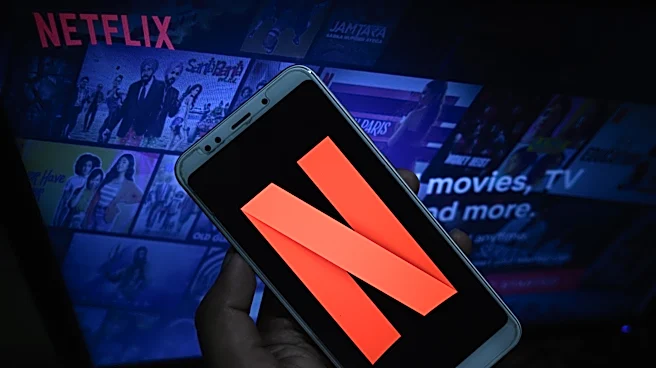
Netflix is experiencing a decline in viewership, with subscribers watching approximately 9% less content than three years ago, according to recent reports. This trend coincides with the streaming giant's decision to implement its second price increase
in just over a year. In March, the ad-supported plan rose from $7.99 to $8.99, the standard ad-free plan from $17.99 to $19.99, and the premium plan from $24.99 to $26.99 per month. The company is also facing heightened competition from other streaming services and platforms like YouTube, which has become a significant destination for television content. This situation has led some subscribers to question the value of their subscriptions, especially given the higher monthly costs and reduced engagement with the platform's content. Social media users have expressed frustration over the continuous price increases and the perceived decline in value.
Why It's Important?
The decline in Netflix viewership, coupled with rising subscription costs, poses a significant challenge to the company's long-term subscriber retention and growth strategy in the U.S. market. As consumers become more discerning about their entertainment spending, the perceived value of a streaming service becomes critical. If subscribers continue to reduce their viewing time while paying more, it could lead to increased churn rates and a reluctance for new users to join. The growing competition from platforms like YouTube and TikTok, which offer diverse and often free content, further fragments the attention economy, making it harder for Netflix to maintain its dominant position. This trend could force Netflix to re-evaluate its pricing models, content strategy, and engagement tactics to justify its cost to subscribers and compete effectively in a saturated streaming landscape. The situation highlights a broader industry challenge where streaming services must constantly innovate to prove their worth against a backdrop of rising costs and abundant alternatives.
What's Next?
Netflix will likely need to address the concerns regarding declining viewership and increasing prices to maintain its subscriber base. The company's strategy may involve a renewed focus on producing high-quality, engaging content that can capture and retain audience attention, potentially through more targeted investments in specific genres or formats. There could also be a re-evaluation of its pricing structure or the introduction of new, more flexible subscription tiers to appeal to a wider range of consumers. Furthermore, Netflix might explore new avenues for engagement, such as integrating more interactive features or expanding into other forms of entertainment to differentiate itself from competitors. The company's ability to adapt to changing consumer habits and competitive pressures will be crucial in determining its future success in the U.S. streaming market.
Beyond the Headlines
The 'zombie subscription' phenomenon, where users pay for services they rarely use, points to a deeper shift in consumer behavior and the psychology of subscription models. This trend suggests that convenience and inertia play a significant role in maintaining subscriptions, even when perceived value diminishes. However, as economic pressures mount and consumers become more conscious of their spending, this inertia may break, leading to a mass exodus from underutilized services. For Netflix, this could mean that while strong financial results are currently reported, the underlying erosion of engagement could signal future instability. The challenge extends beyond just content; it's about capturing and sustaining attention in an increasingly fragmented digital world, where short-form content platforms like TikTok are redefining entertainment consumption habits. The long-term implications could reshape how streaming services design their offerings, focusing not just on content volume but on maximizing active user engagement and perceived value.