





What's Happening?
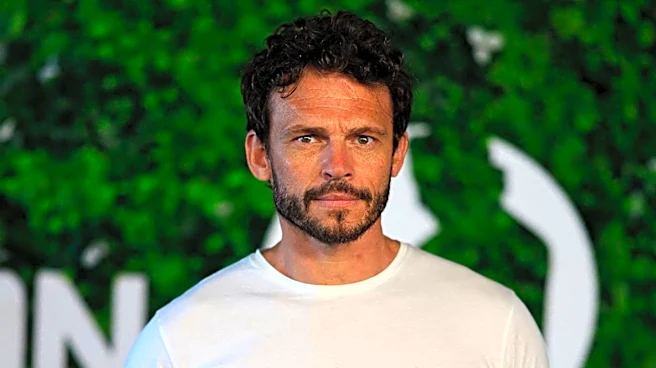
Actor Ioan Gruffudd has issued a public warning after a fan was scammed into believing she was in an extramarital relationship with him for over a year. The 'Fantastic Four' star revealed that a woman approached him at a recent convention, presenting
hundreds of explicit and disturbing AI-generated images and videos that someone claiming to be him had sent her. The scammer reportedly targeted the woman on a social media page, then directed her to communicate via Telegram, where the AI content was used to 'prove' the imposter's identity. Gruffudd urged his followers not to engage with anyone claiming to be him through unofficial channels, emphasizing that he would never share his personal contact information with unknown individuals. He advised anyone targeted by such scams to report the incident to the police and has filed a police claim himself, publicly sharing the scammer's mobile number.
Why It's Important?
This incident highlights the growing threat of AI-generated content being used for sophisticated impersonation scams, posing significant risks to public figures and their fans. For celebrities like Ioan Gruffudd, such scams can damage their reputation, create emotional distress for victims, and erode trust between public figures and their audience. For the general public, it underscores the critical need for vigilance against online deception, especially with the increasing realism of AI-generated media. The use of AI to create convincing fake images and videos makes it harder for individuals to discern authenticity, leading to potential financial exploitation, emotional manipulation, and privacy breaches. This case serves as a stark reminder of the evolving landscape of online fraud and the challenges in combating it.
What's Next?
Following Ioan Gruffudd's public warning and police report, authorities will likely investigate the scammer's activities, potentially leading to efforts to identify and apprehend the individual responsible. Social media platforms may face increased pressure to implement more robust verification processes and AI detection tools to prevent such impersonation schemes. Public figures and their teams may also enhance their communication strategies to better inform fans about official channels and potential scams. For the broader public, increased awareness campaigns about AI-generated fraud are anticipated, encouraging users to be skeptical of unsolicited communications and to verify identities through official means. The incident may also prompt further discussions within the tech community about developing countermeasures against the malicious use of AI.
Beyond the Headlines
This scam involving Ioan Gruffudd delves into deeper implications concerning digital identity, consent, and the ethical boundaries of artificial intelligence. The creation and dissemination of explicit AI-generated content without consent raise serious questions about digital rights and the legal frameworks needed to address such violations. It exposes the vulnerability of individuals to sophisticated psychological manipulation, where technology blurs the lines between reality and fabrication. Furthermore, it highlights the potential for AI to be weaponized for personal harm, beyond financial fraud, impacting emotional well-being and trust in digital interactions. This case could serve as a catalyst for more stringent regulations on AI development and usage, particularly concerning image and video generation, to protect individuals from exploitation and preserve the integrity of online communication.